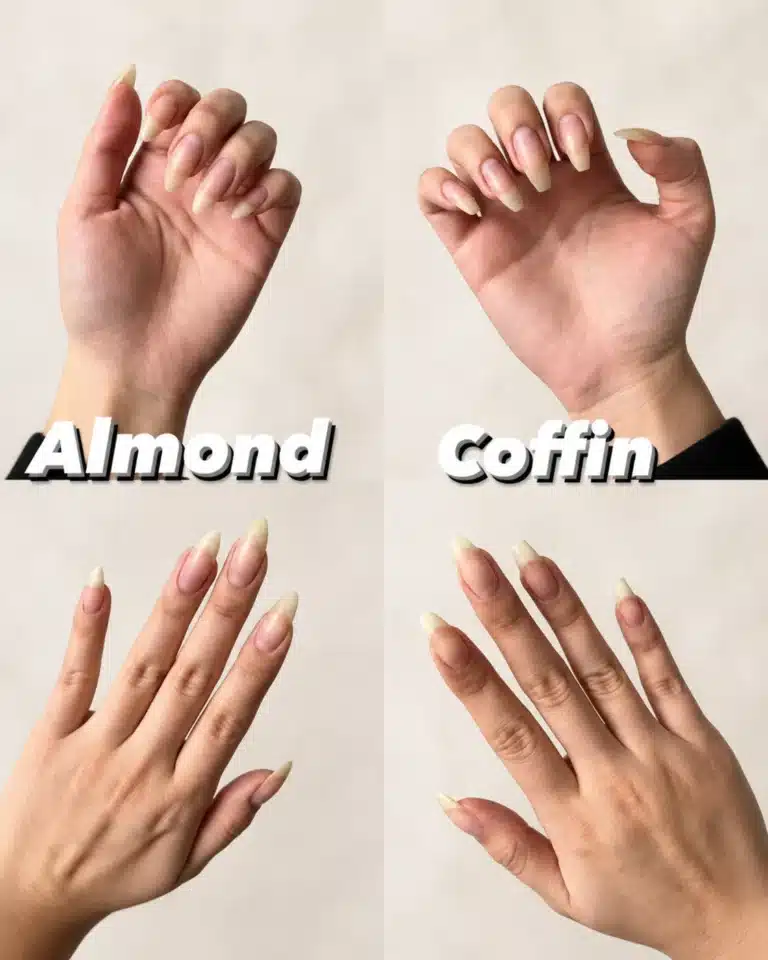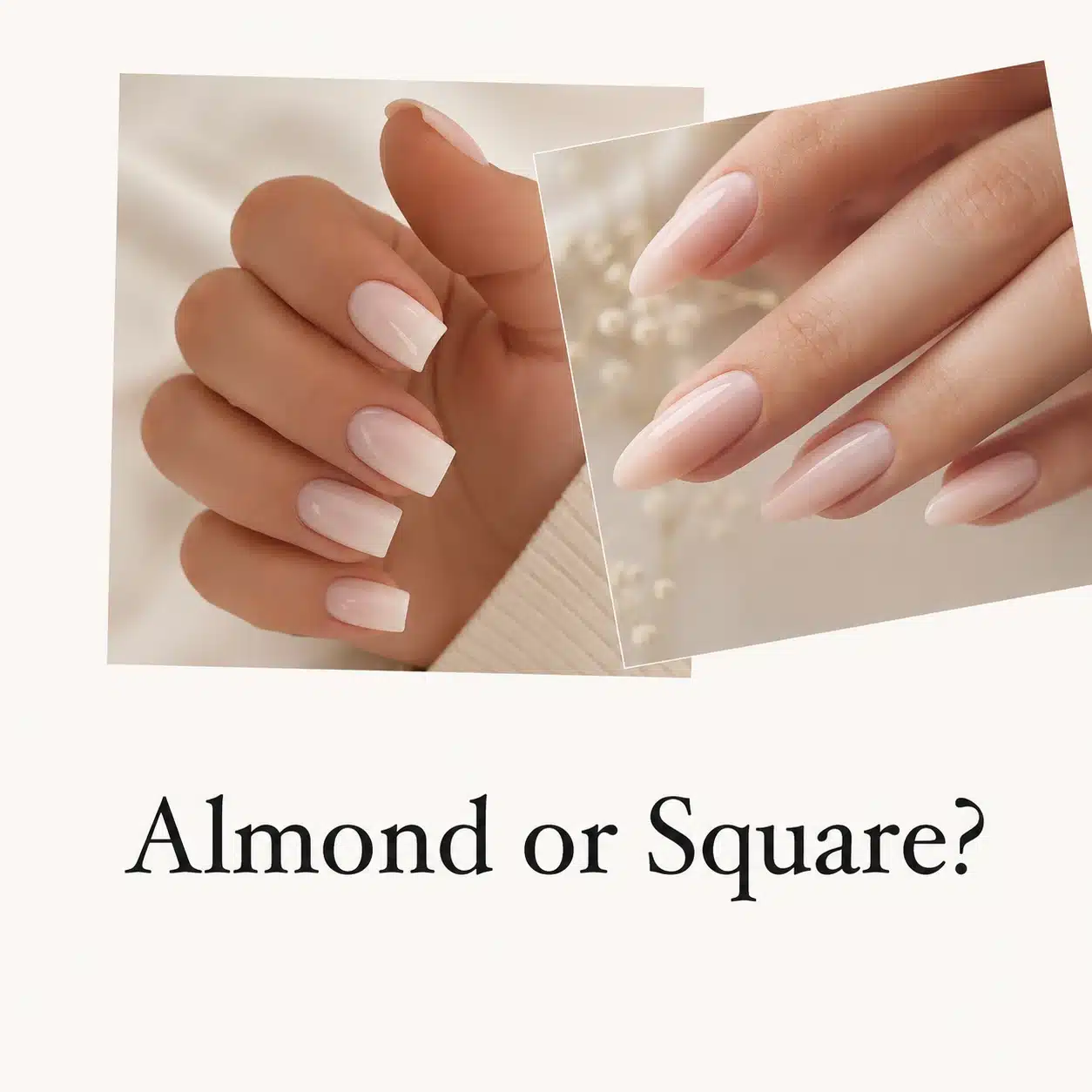
Almond vs square nails is really a choice between a soft, lengthening silhouette and a clean, structured edge. Almond nails taper toward a rounded point, so they usually make fingers look longer and suit medium to long nails. Square nails keep their width and finish with a flat tip, making them practical on short nails and ideal for crisp French lines or graphic designs.
The better shape depends on your natural nail length, nail-bed width, daily routine, and the look you want. Choose almond when you want elegance and visual length. Choose square when you want a bold outline, a wider art surface, and a shape that still reads clearly at short length. This guide compares both options without pretending that one shape wins for every hand.
- Almond nails create more visual length because the sides taper toward a soft center point.
- Square nails work especially well on short natural nails because the flat edge remains recognizable without extra length.
- Neither shape is automatically healthier; careful filing, intact sidewalls, appropriate length, and correct product use matter more.
- Almond often flatters shorter or wider fingers, while square can balance long fingers and narrow nail beds.
- Ask for a soft almond or softened square when you want a more wearable version of either shape.
Table of Contents
Almond vs Square Nails at a Glance
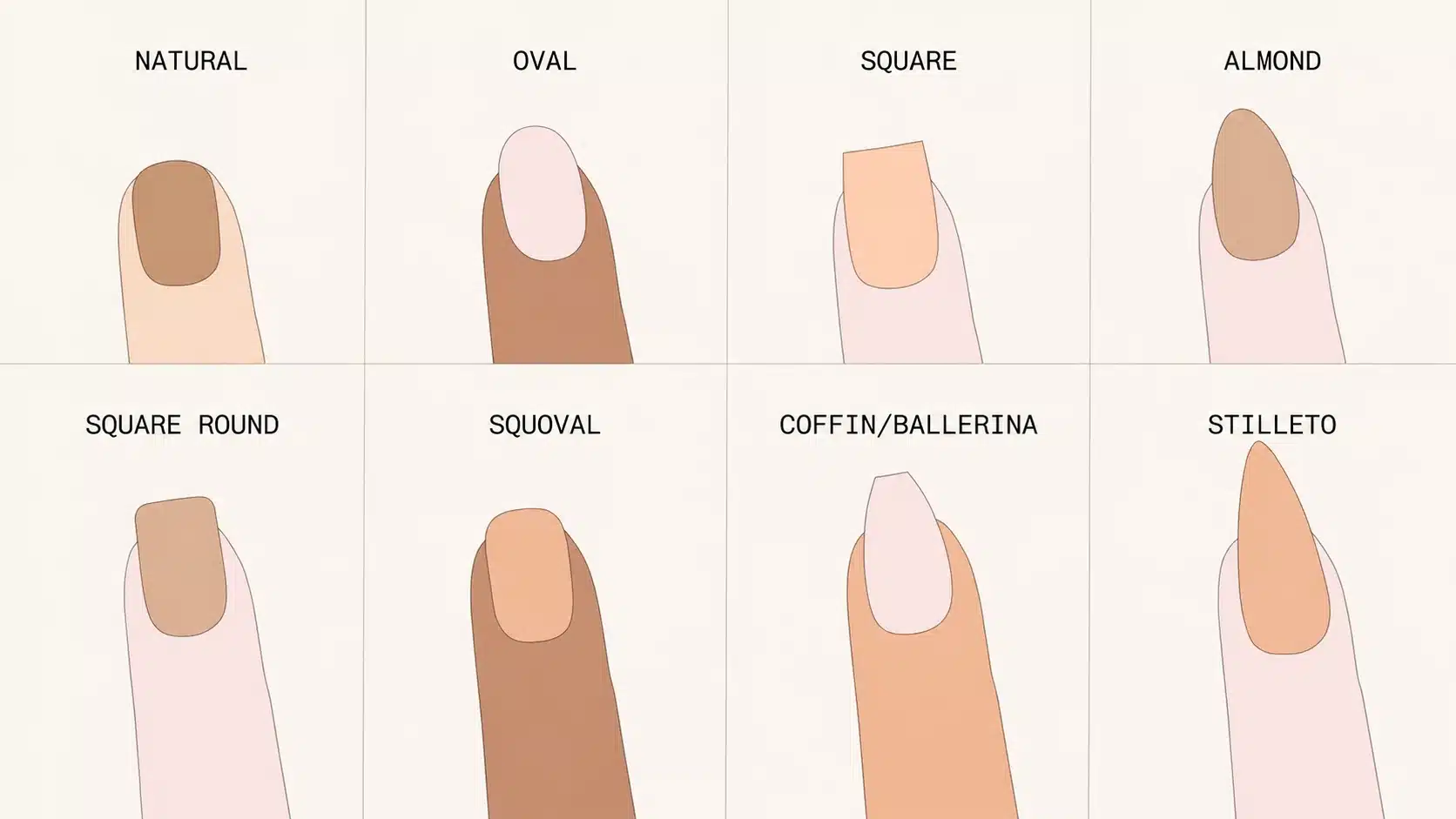
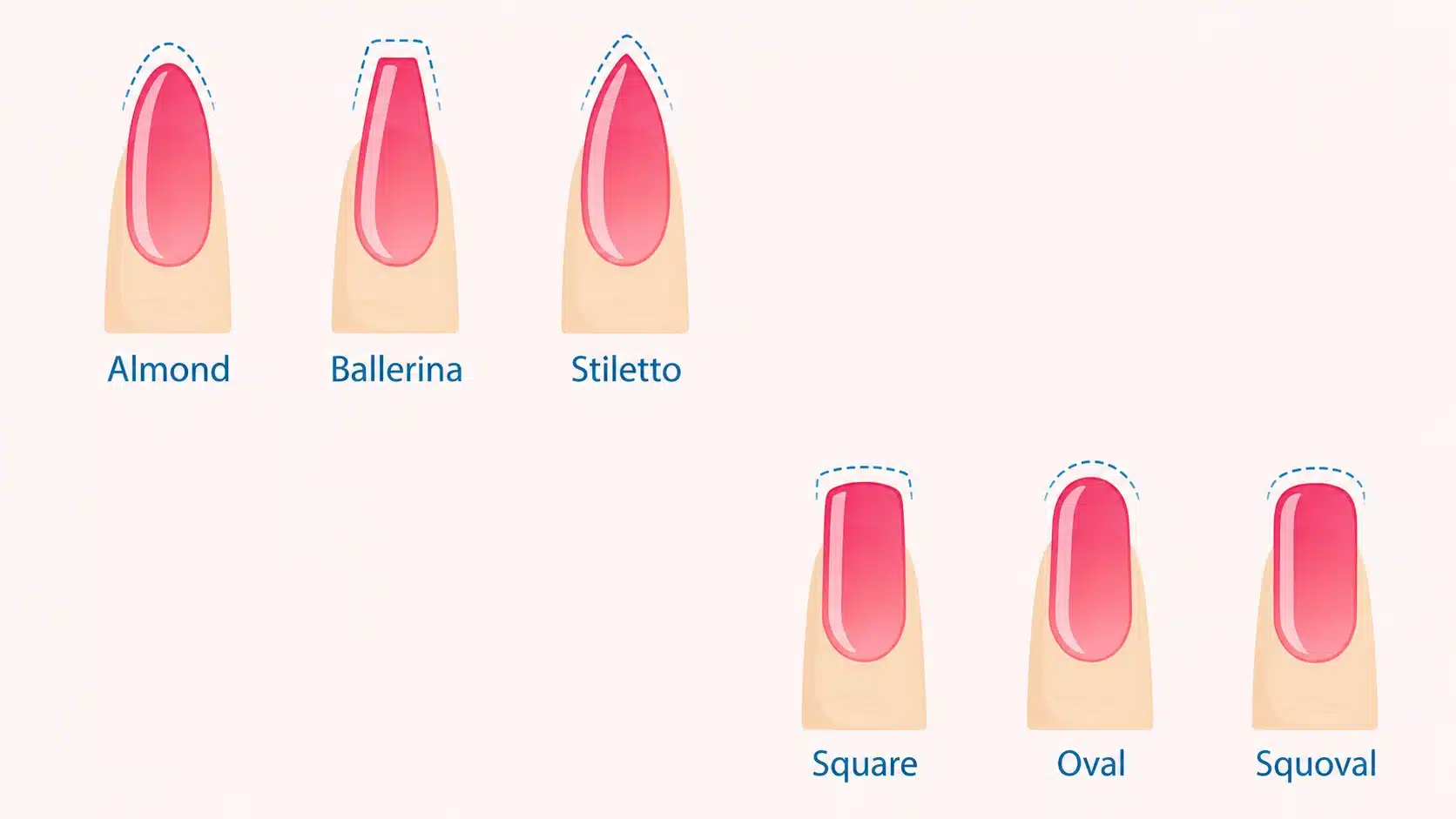
The fastest way to decide is to compare the shape from the sidewalls to the free edge. Almond nails narrow gradually and meet at a rounded tip. Square nails stay nearly parallel through the sidewalls and end in a straight horizontal edge.
| Feature | Almond Nails | Square Nails |
|---|---|---|
| Outline | Tapered sides with a soft point | Straight sides with a flat tip |
| Best length | Medium to long | Short to long |
| Visual effect | Lengthens and slims the fingers | Adds structure and visual width |
| Common weak point | Over-filed sidewalls or thin tip | Corners that catch or chip |
| Best design match | Curved French tips, chrome, centered art | Straight French tips, geometric art, color blocking |
If both shapes feel too different, compare almond vs oval nails next. Oval keeps a rounded edge but removes the stronger almond point, which can make the decision easier for natural nails.
What Are Almond Nails?
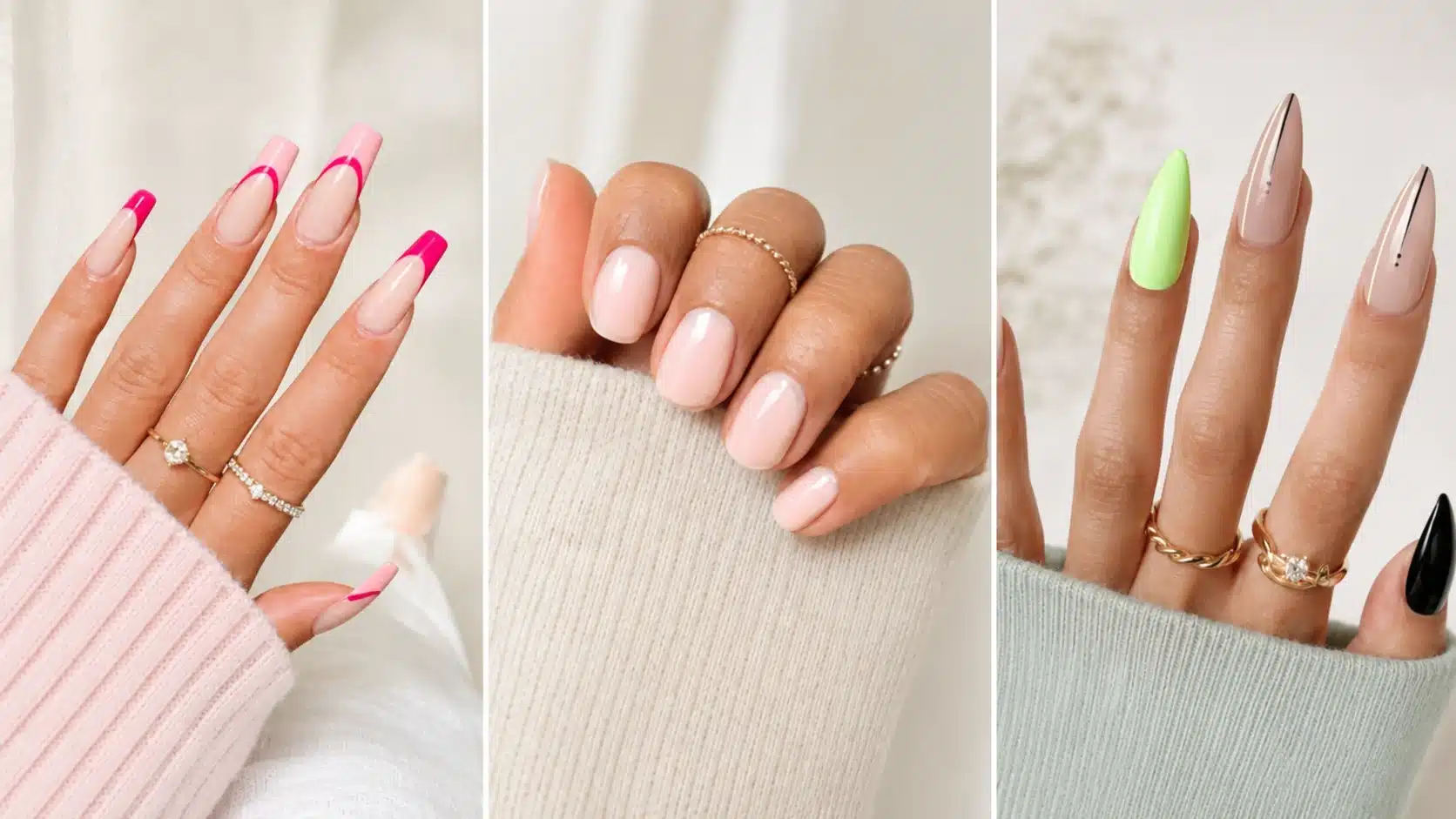
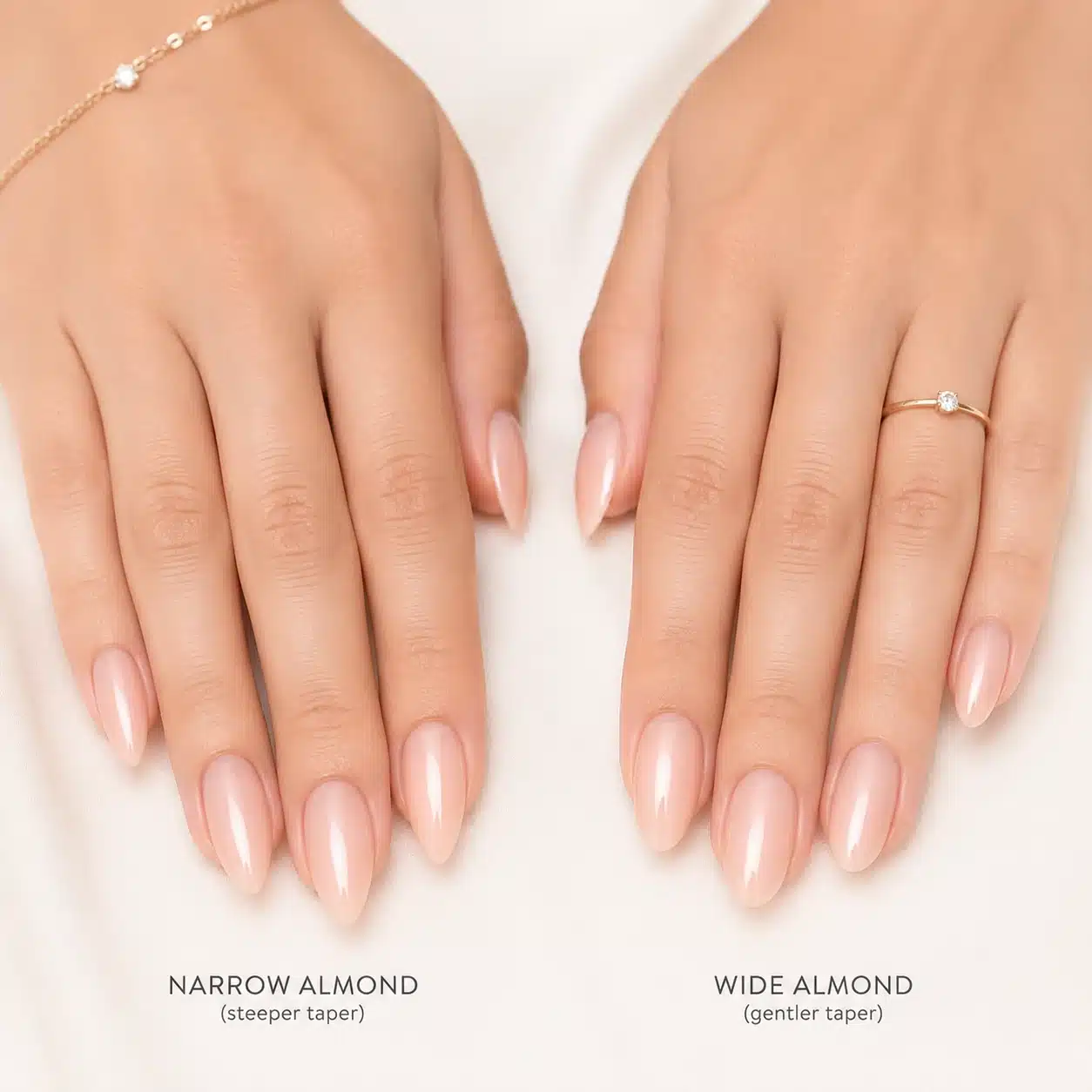
Almond nails have a wider base, tapered sidewalls, and a softly rounded point. The tip should sit in the center of the nail rather than leaning to one side. A balanced almond is curved, not sharp like a stiletto, and it needs enough free edge to show the taper clearly.
This shape is popular because the eye follows the narrowing outline toward the fingertip. That creates an elongating effect even when the polish is neutral. A glossy nude, milky pink, or simple French design makes the silhouette especially obvious. The soft finish in these milky almond nail ideas shows why the shape works so well with understated colors.
Almond can be created on natural nails, but medium length is usually more convincing than very short length. On short nails, ask for baby almond or soft almond instead of forcing a narrow point. Removing too much width from the sides can weaken the structure and make the nail look pinched.
What Are Square Nails?
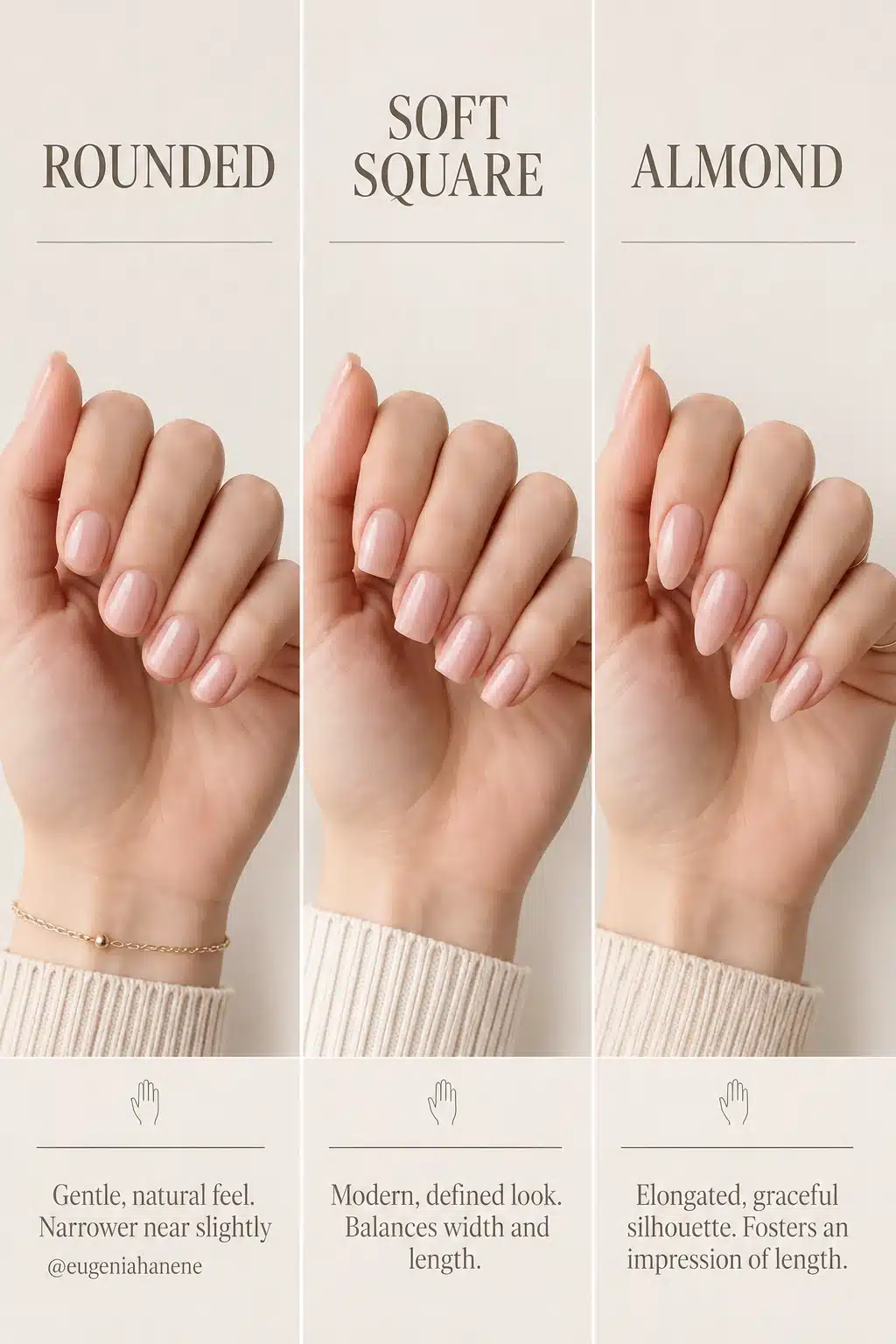
Square nails keep the sidewalls relatively straight and end with a flat free edge. A true square has defined corners, while a softened square lightly rounds those corners without turning the whole tip into a squoval.
The shape reads clearly at short length, which is one reason it remains useful for natural nails. You do not need a long extension to create the basic outline. Square also provides a broad surface for polish and nail art, so solid dark colors, graphic details, and straight French tips look precise.
Square is not one single mood. A short natural square can look clean and practical, while a long square acrylic set feels bolder and more dramatic. Readers who like a strong flat tip but want more taper should also compare almond vs coffin nails, because coffin sits between the two shapes visually.
Which Shape Is Stronger and Less Likely to Break?
There is no universal strength winner. The result depends on length, natural nail condition, sidewall support, product structure, and how you use your hands. Shape changes where stress and catching are most likely to happen.
Short square nails can feel sturdy because they preserve width across the free edge. The tradeoff is that sharp corners can catch on hair, fabric, bags, or tight spaces. Once a corner chips, the flat edge can become uneven. A softened square reduces that snagging risk while keeping the structured look.
Almond nails have no sharp corners, so they often glide past fabrics more easily. However, the taper removes width from the sides, and an aggressively filed almond can become weak around the stress area. A medium almond with supported sidewalls is safer than a very narrow point carved into a thin natural nail.
For basic care, Mayo Clinic’s healthy-nail guidance recommends trimming nails straight across, rounding the tips in a gentle curve, keeping nails clean and dry, moisturizing nails and cuticles, and limiting harsh nail-care products. Those habits matter more than chasing a supposedly unbreakable shape. Keep the length realistic for your routine and avoid filing deeply into the sidewalls.
Which Is Better for Short Natural Nails?
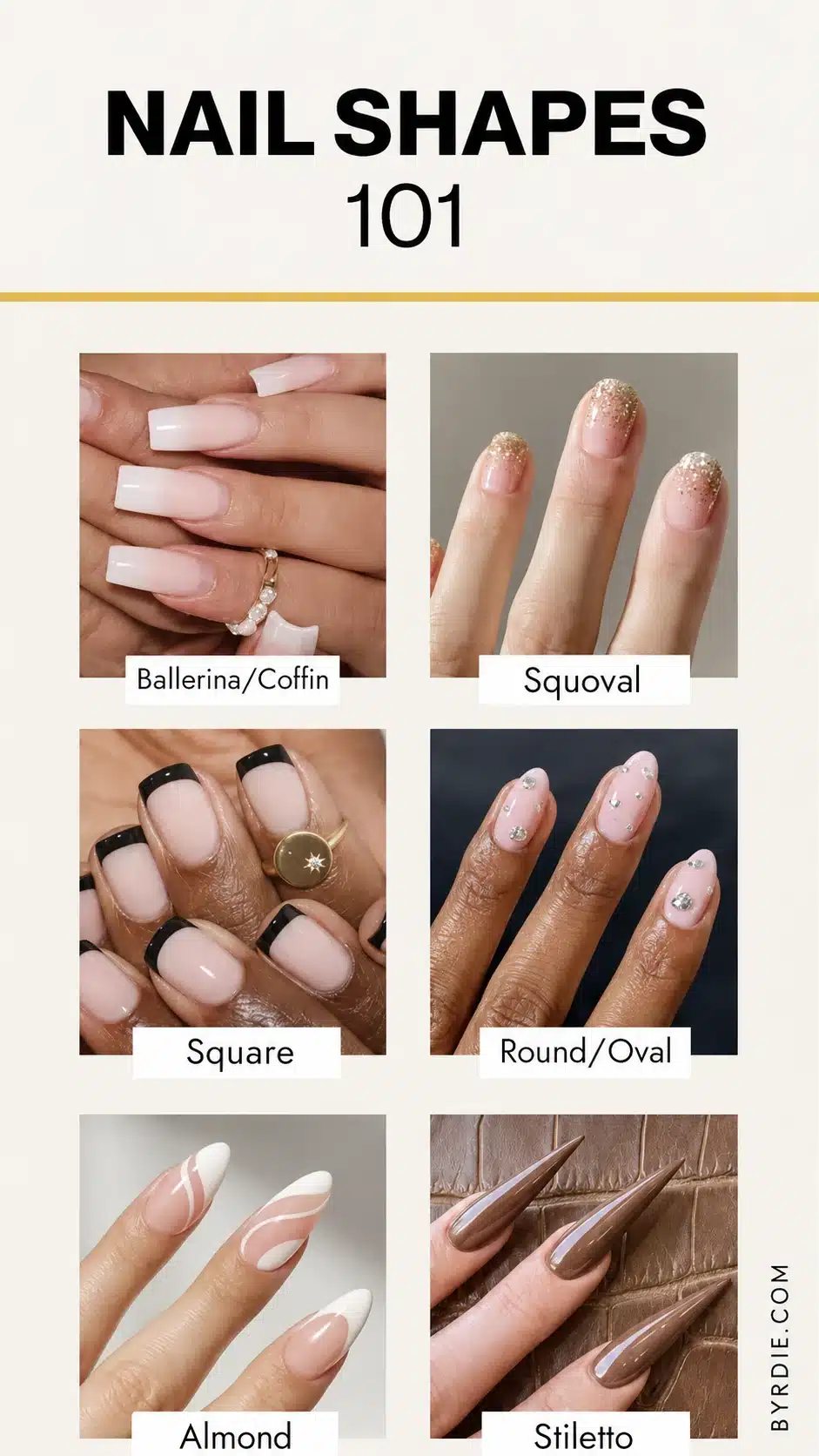
Square usually wins for very short natural nails because the flat edge is visible immediately. Even with little free edge, the nail can look intentionally shaped. A short square or softened square is useful for typing, cooking, childcare, or anyone who prefers low-maintenance length.
Almond needs more room. When the nail is too short, there may not be enough free edge to create both the taper and the rounded point. Trying to force the outline can narrow the sidewalls too much. A baby almond can work if the nail extends slightly beyond the fingertip, but a soft oval may be more realistic while the nail grows.
For a short square, ask the technician to preserve the sidewalls and soften only the corners. For a short almond, ask for the widest possible base with a gentle taper rather than a sharp point. The goal is a recognizable shape without sacrificing support.
Almond or Square Nails for Chubby Fingers?
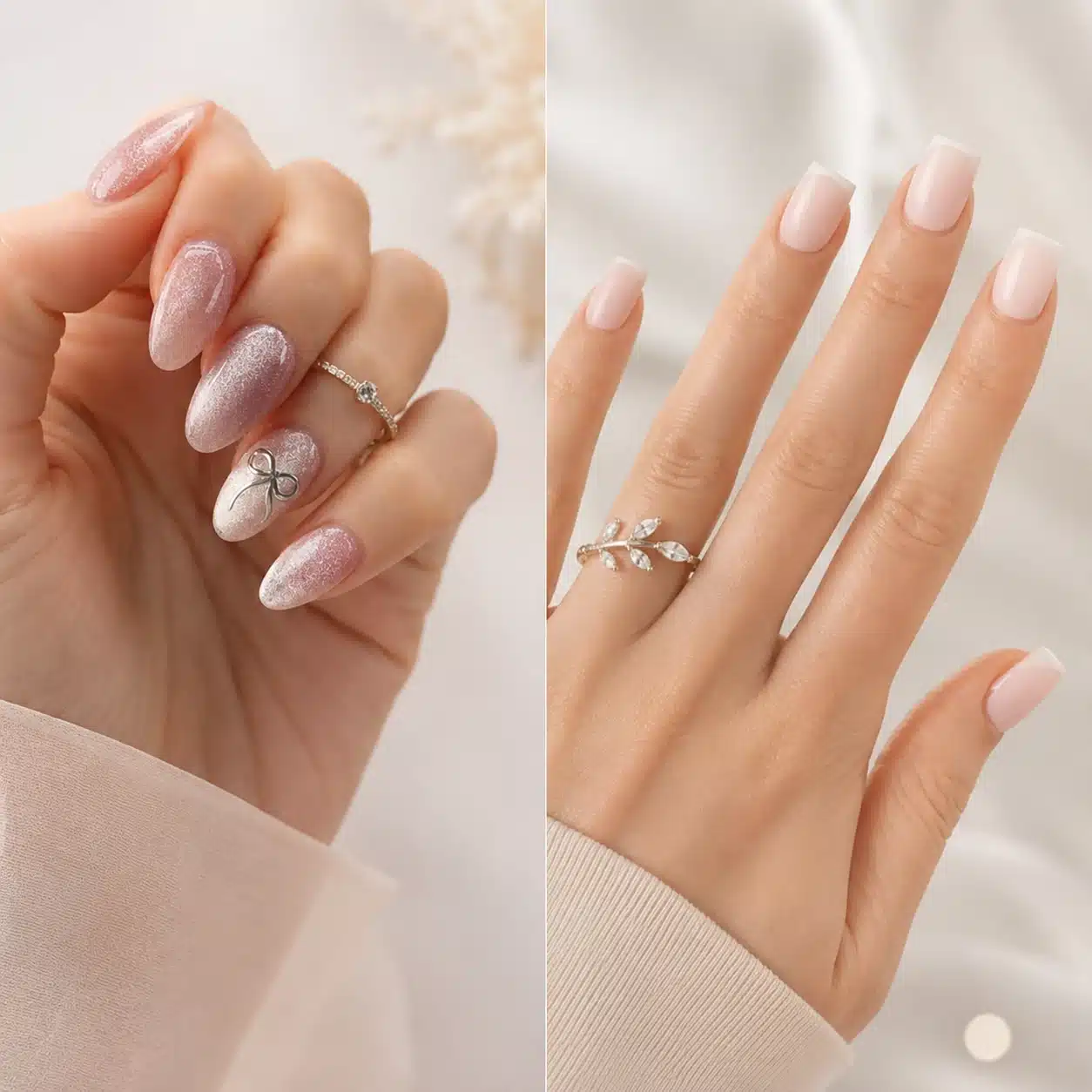
Almond usually creates the stronger lengthening effect on shorter, wider, or fuller-looking fingers. The tapered outline draws the eye forward and reduces visual width at the tip. A medium almond in a sheer nude, blush, or soft pink can make the hand look more elongated without needing an extreme length.
Square nails can still work beautifully on fuller fingers, especially when the wearer prefers a clean, modern style. The most flattering version is often a medium or softened square rather than an extra-wide, very short block. Keeping the sidewalls neat and choosing a color close to the skin tone can make the result feel balanced.
Personal style matters more than a rigid hand-shape rule. A reader who loves strong straight lines may feel better in square nails even if almond is technically more lengthening. The best shape is the one that looks intentional and fits the way the person actually uses their hands.
Natural Nails vs Gel, Gel-X, and Acrylic
On natural nails, square is often easier to maintain because it follows the existing width and requires less tapering. Almond is possible when the nail has enough length and a reasonably strong free edge. If the natural nail bends easily, a thin overlay may help maintain the curve without creating unnecessary bulk.
Gel-X and acrylic extensions make both shapes easier because the length and apex can be built intentionally. Almond extensions need a centered taper and a rounded point. Square extensions need parallel sidewalls, a straight tip, and enough structure to support the corners. Long square nails should not be built flat, because the enhancement still needs an apex and balanced architecture.
Whatever enhancement system you choose, follow the product manufacturer’s label directions, curing instructions, removal guidance, and warning statements. A fashionable shape does not replace correct product use, clean tools, or careful removal.
Which Shape Is Better for French Tips and Nail Art?
Square nails are excellent for straight French tips, color blocking, checkerboard art, geometric lines, and designs that benefit from a wide canvas. The flat edge creates a clean boundary, which can make a classic white French manicure look crisp. A softened square keeps the same design space with less corner snagging.
Almond nails are better for curved smile lines, V-French tips, chrome, cat-eye finishes, swirls, centered gems, and art that follows the taper. The tip naturally guides the composition toward the center. These classic almond French tips show how a narrow curved edge can emphasize the shape without covering the whole nail.
For a more detailed press-on reference, almond French tip nails with a white gold line demonstrate how a fine outline follows the almond curve. Square lovers can use the same colors but keep the tip straighter. The broader pink and white nail guide also shows how French styling changes across shapes and lengths.
How to Change From Square to Almond
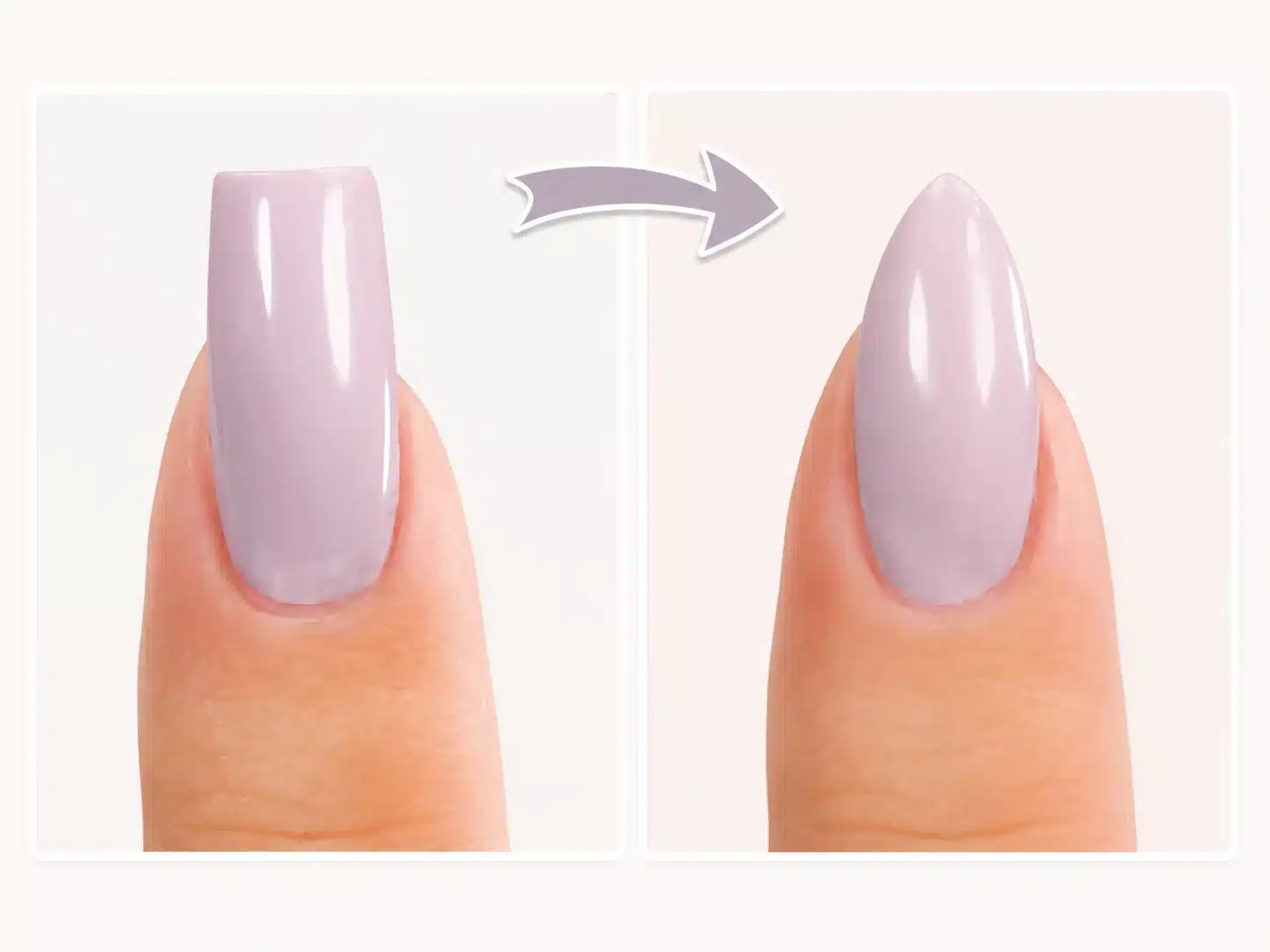
Changing from square to almond requires enough length to create a taper. Do not immediately file away both corners if the nail barely extends past the fingertip. Grow the free edge first or use an extension, then reshape gradually.
Start by marking the center of the tip. File one side toward that point, then switch to the other side and match the angle. Keep checking the nail from above and from the front so the point does not drift. Once both sides are balanced, soften the point into a rounded almond tip.
If the nails are thin or damaged, transition through oval before attempting almond. That removes less sidewall width at once. When moving from almond back to square, the nail usually needs to grow until a flat edge can be cut without leaving the corners too narrow.
What to Ask for at the Salon
For almond nails, say: “I want a medium soft almond with a centered rounded point. Please keep the sidewalls supported and do not make the tip too sharp.” Show a photo with the length and width you prefer, because one technician’s almond can be another technician’s stiletto.
For square nails, say: “I want a short or medium square with straight sidewalls and a flat tip. Please soften the corners slightly so they do not catch.” Specify whether you want a true square, softened square, or squoval.
Also tell the technician whether you are keeping natural nails or adding gel, Gel-X, or acrylic. Shape, length, and enhancement type should be decided together. Bring reference photos that show the exact length, sidewall width, and tip softness you want.
For a low-key finish that lets the silhouette stay visible, compare these clean natural shine nails before your appointment.
Frequently Asked Questions
What nail shape is most attractive?
The most attractive shape is the one that balances the hand and matches the wearer’s style. Almond creates a softer, lengthening effect, while square creates a clean, confident outline. Neither is universally more attractive.
Are square nails out of style in 2026?
No. Square nails remain current in short natural manicures, clean French sets, solid-color looks, and long extensions. The modern version often uses a softer corner, cleaner sidewall, or medium length rather than an extremely wide, heavy tip.
Which nail shape is the healthiest?
No cosmetic shape is automatically the healthiest. Nail health depends more on gentle filing, preserving the sidewalls, avoiding excessive length, using products according to directions, and removing enhancements correctly. A short softened square or rounded shape can be practical because it is less likely to catch.
Do almond or square nails look better on chubby hands?
Almond usually gives the stronger lengthening effect because the sides taper toward the center. Square can still look balanced when the length is medium, the width is controlled, and the corners are softened. Preference and lifestyle should make the final decision.
Final Verdict
Choose almond nails when you want a soft, elegant shape that visually lengthens the fingers and suits curved French tips, chrome, and centered designs. Choose square nails when you want a clear structured edge, a dependable short-nail option, and more space for straight French lines or graphic art.
For most short natural nails, softened square is the easier starting point. For medium or long nails and a more lengthening result, soft almond is usually the better fit. The winning shape is not the one trending hardest; it is the one your nail length, structure, and daily routine can support comfortably.
Try next: blush pink nail polish | natural pink nail polish | pink gel nail polish | milky white nail polish