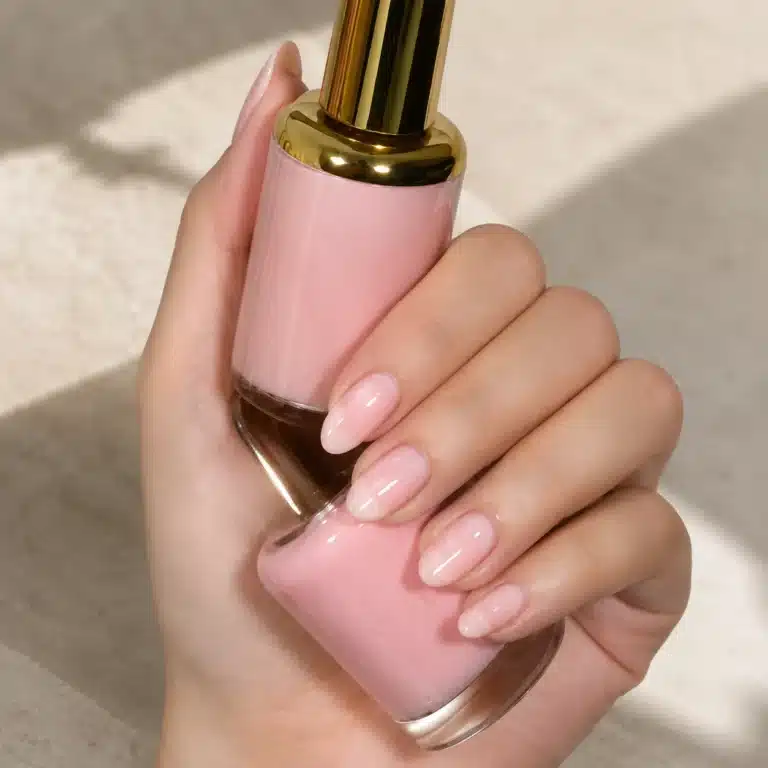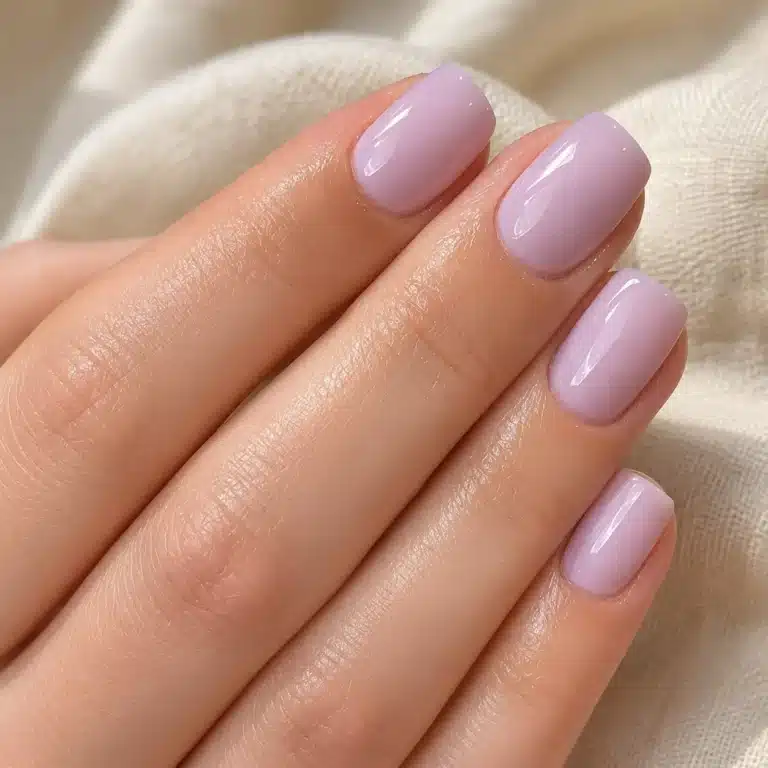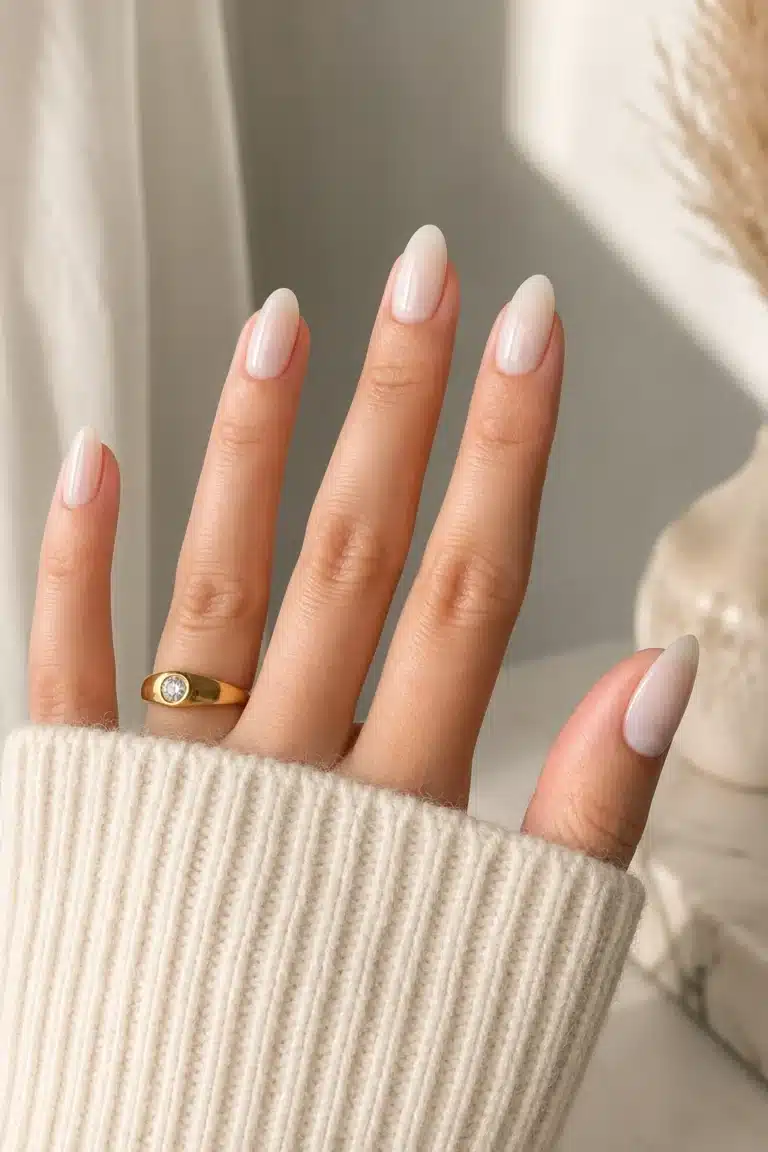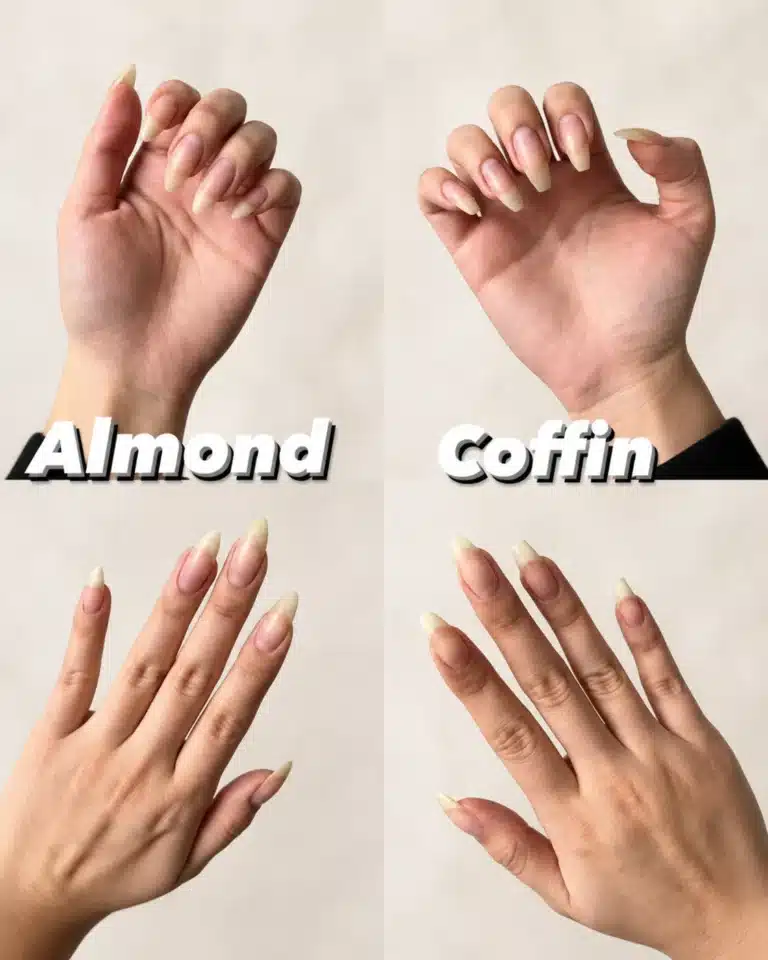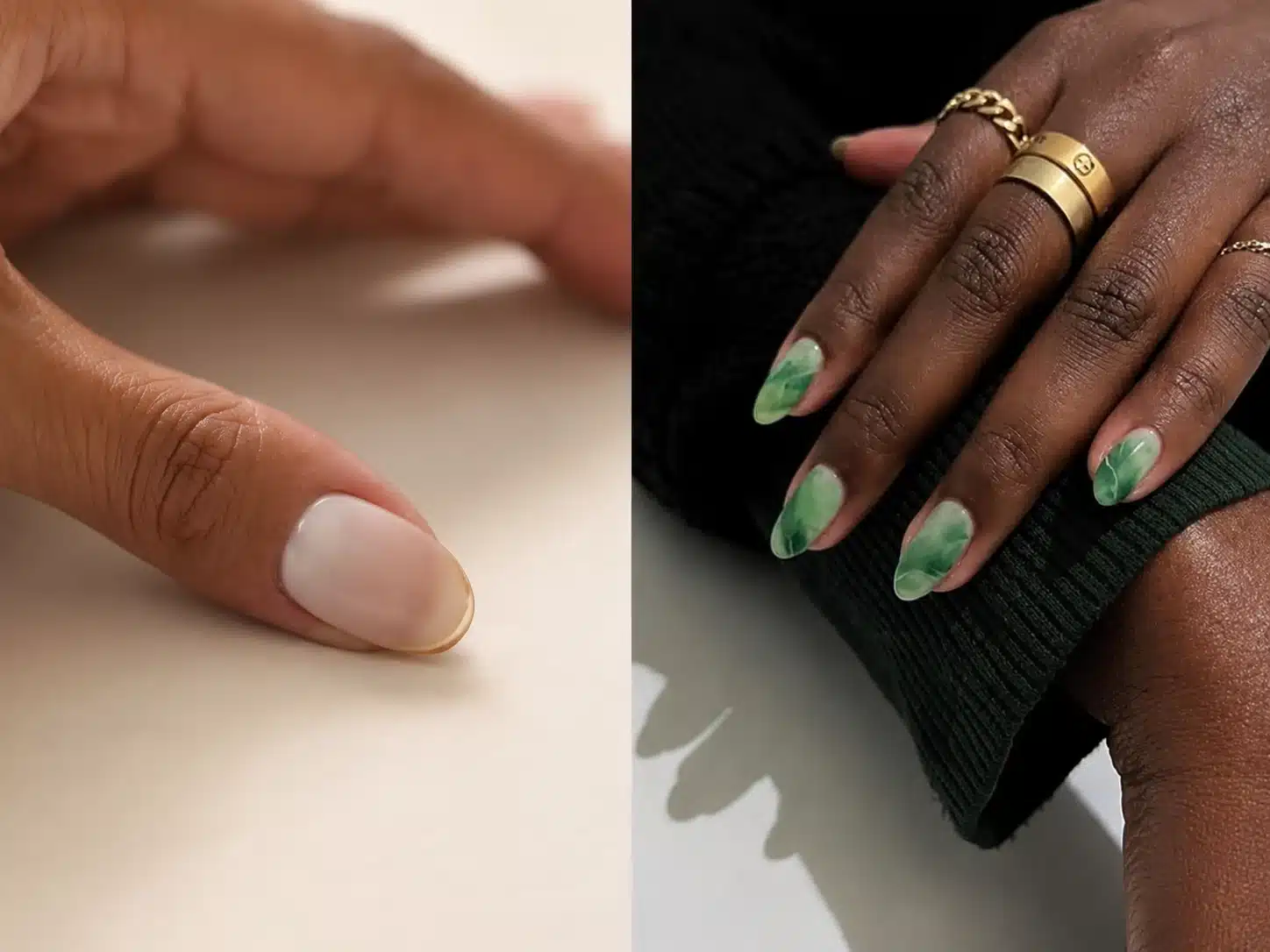
Almond vs oval nails is less about choosing the shape that looks best in isolation and more about matching the curve, length, and maintenance level to your own nail beds. Both shapes have rounded edges and can visually lengthen the fingers, but an oval nail keeps more width through the tip while an almond nail narrows toward a soft point.
This guide uses direct visual comparisons to show where the two shapes differ, which lengths support each outline, and what to request at the salon. If you want to browse the wider shape family before deciding, start with InspoNails’ existing almond nail ideas.
Key Takeaways
- Oval nails curve continuously around the free edge; almond nails taper through the sidewalls and finish at a softer point.
- Oval is easier to preserve at a short natural length, while a clear almond silhouette usually needs more free edge.
- Neither shape is universally the most attractive or healthiest—the best choice protects your natural sidewalls and fits your routine.
Table of Contents
Understanding Oval and Almond Nail Shapes
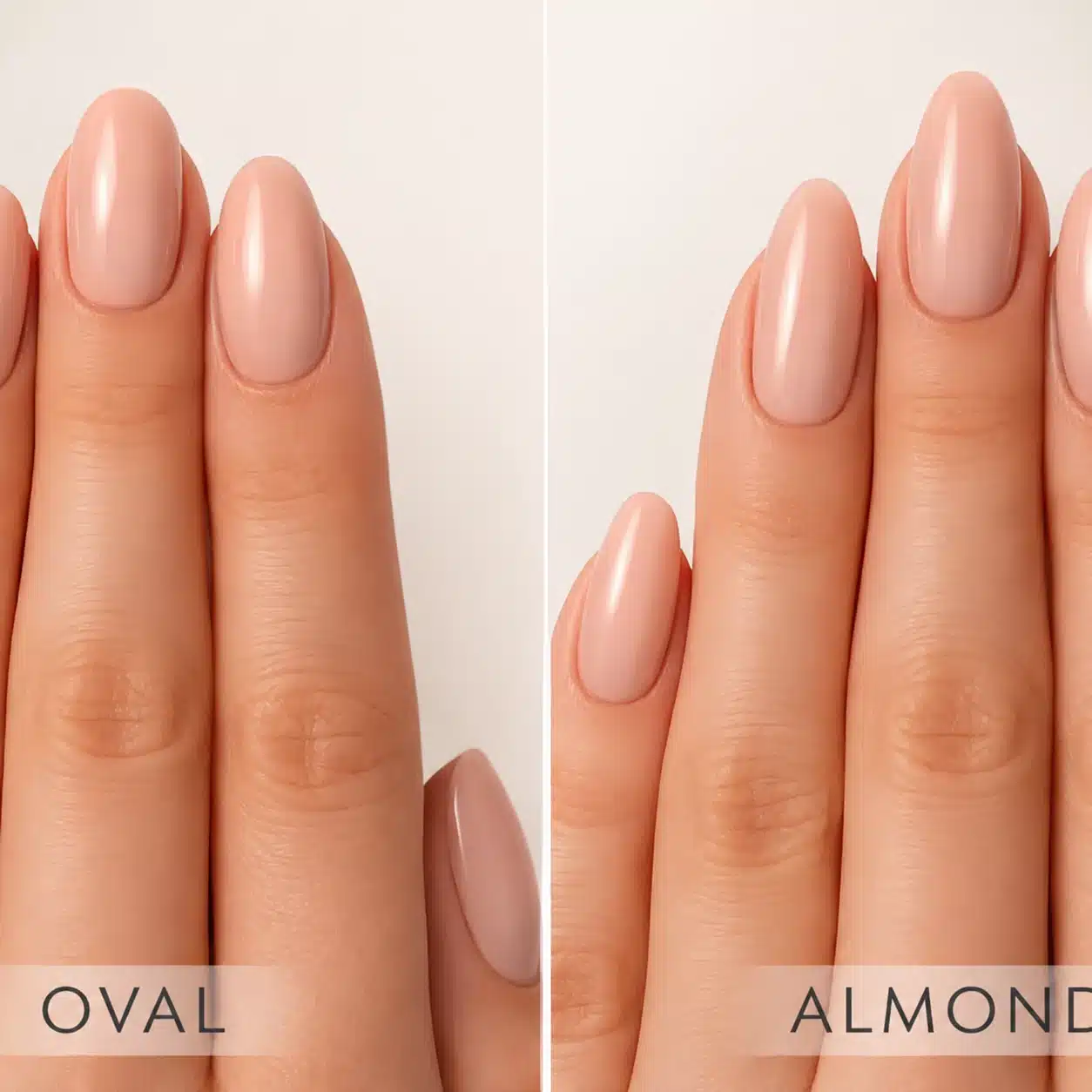
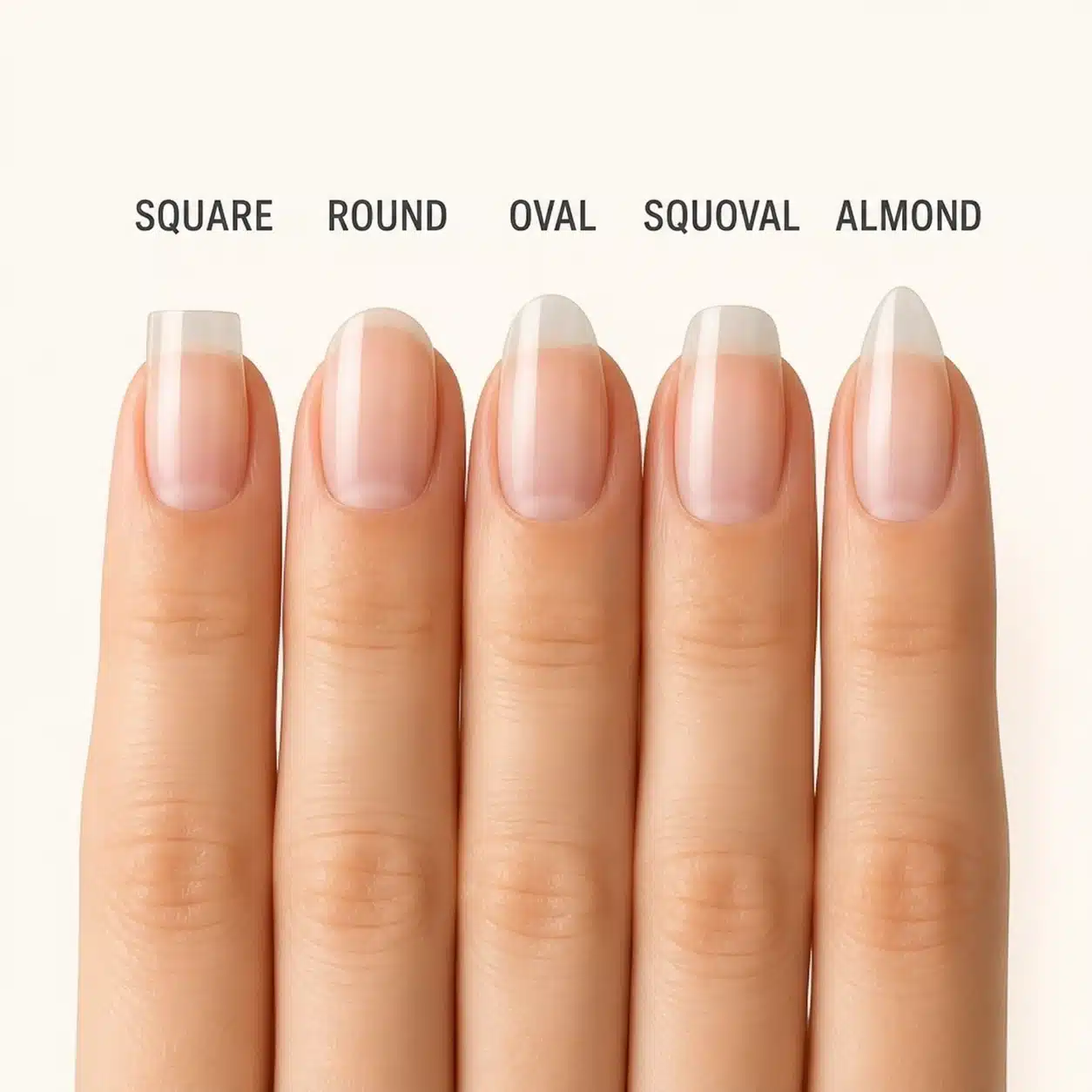
Oval and almond belong to the same rounded shape family, which is why they are frequently confused in photos. The easiest place to look is not the very tip but the sidewalls: oval nails remain fuller for longer, while almond nails begin narrowing earlier and more deliberately.
What Are Oval Nails?
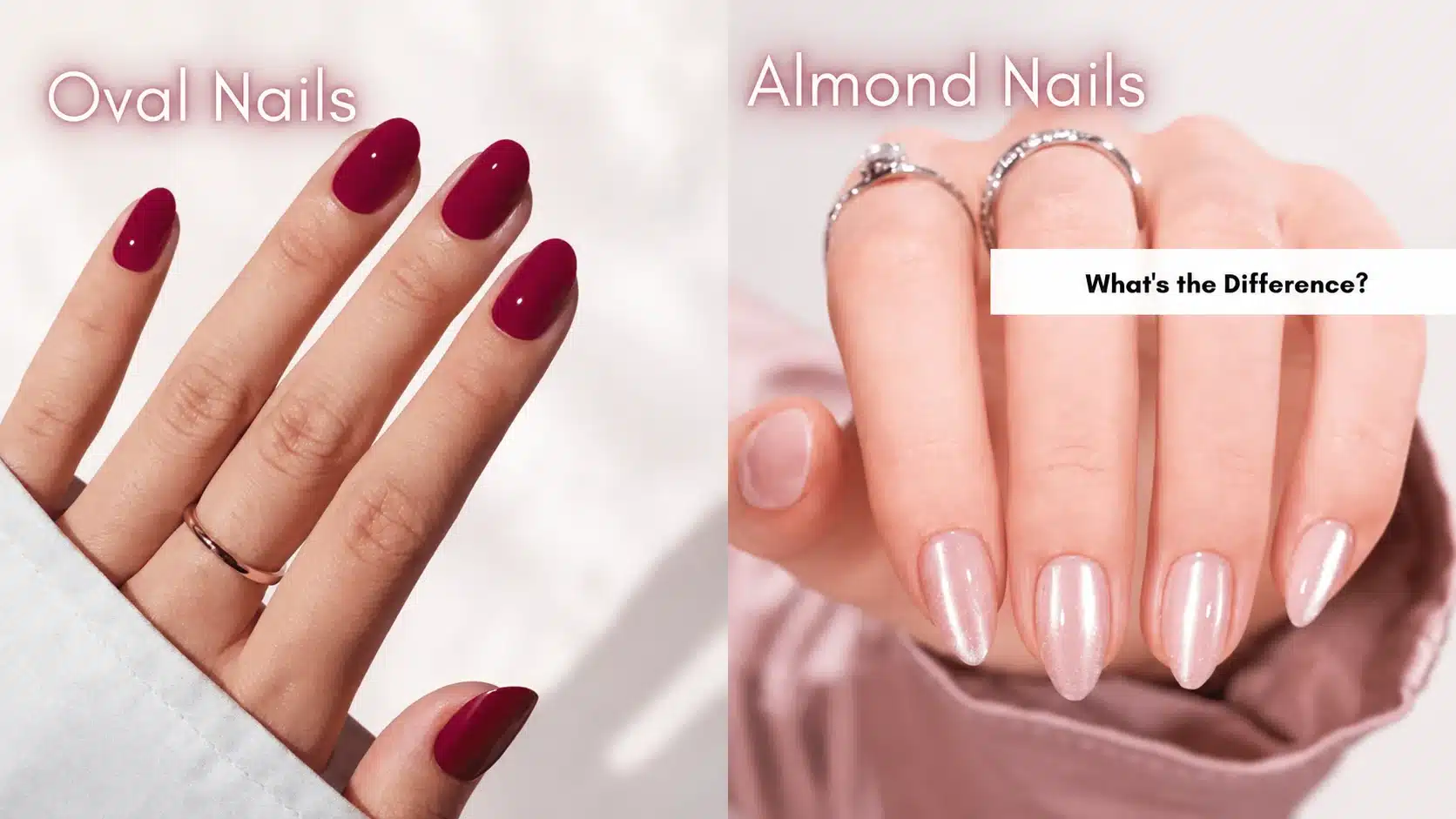
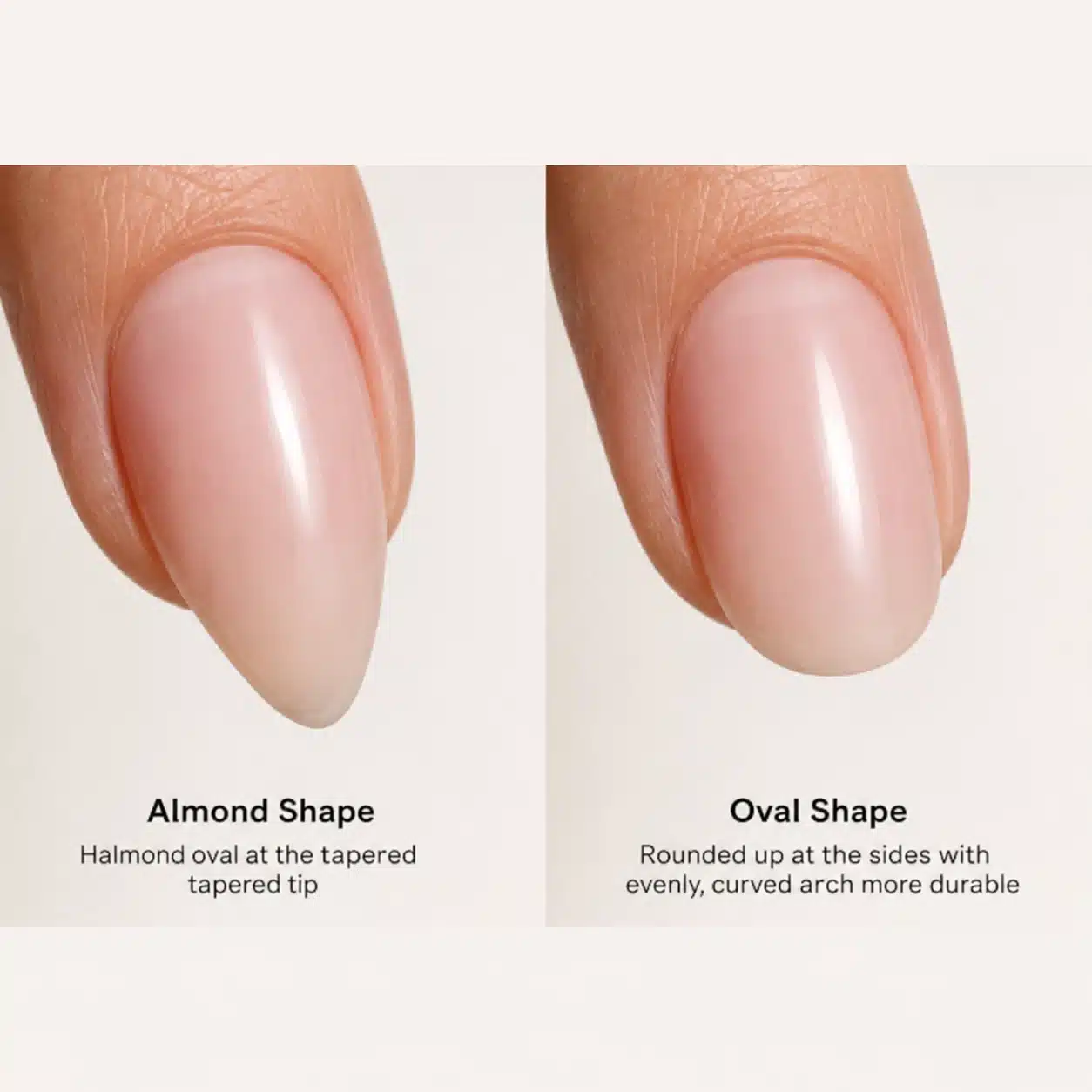
Oval nails have sidewalls that stay relatively parallel before flowing into one continuous rounded free edge. There is no pointed center. Viewed from above, the curve resembles the outline of an egg, with the widest area remaining close to the natural nail bed.
Because the corners are filed away and the tip remains broad, an oval shape can work on short or medium natural nails. It is a useful option when you want a lengthening effect without the stronger taper of almond. The shape also leaves room for sheer color, solid polish, or a curved micro French line.
What Are Almond Nails?
Almond nails narrow gradually from the sidewalls toward a soft, rounded peak. The center is more defined than an oval but not sharp like a stiletto. A balanced almond should look symmetrical from the front, with both sides meeting at the same softened point.
The taper is clearest at medium length because the technician has enough free edge to narrow the sides gradually. Short almond nails can work, but they often become “soft almond” or “baby almond” so the sidewalls are not over-filed. For a color example that shows the taper clearly, see these soft pink almond nails.
Differences Between Oval vs Almond Nails
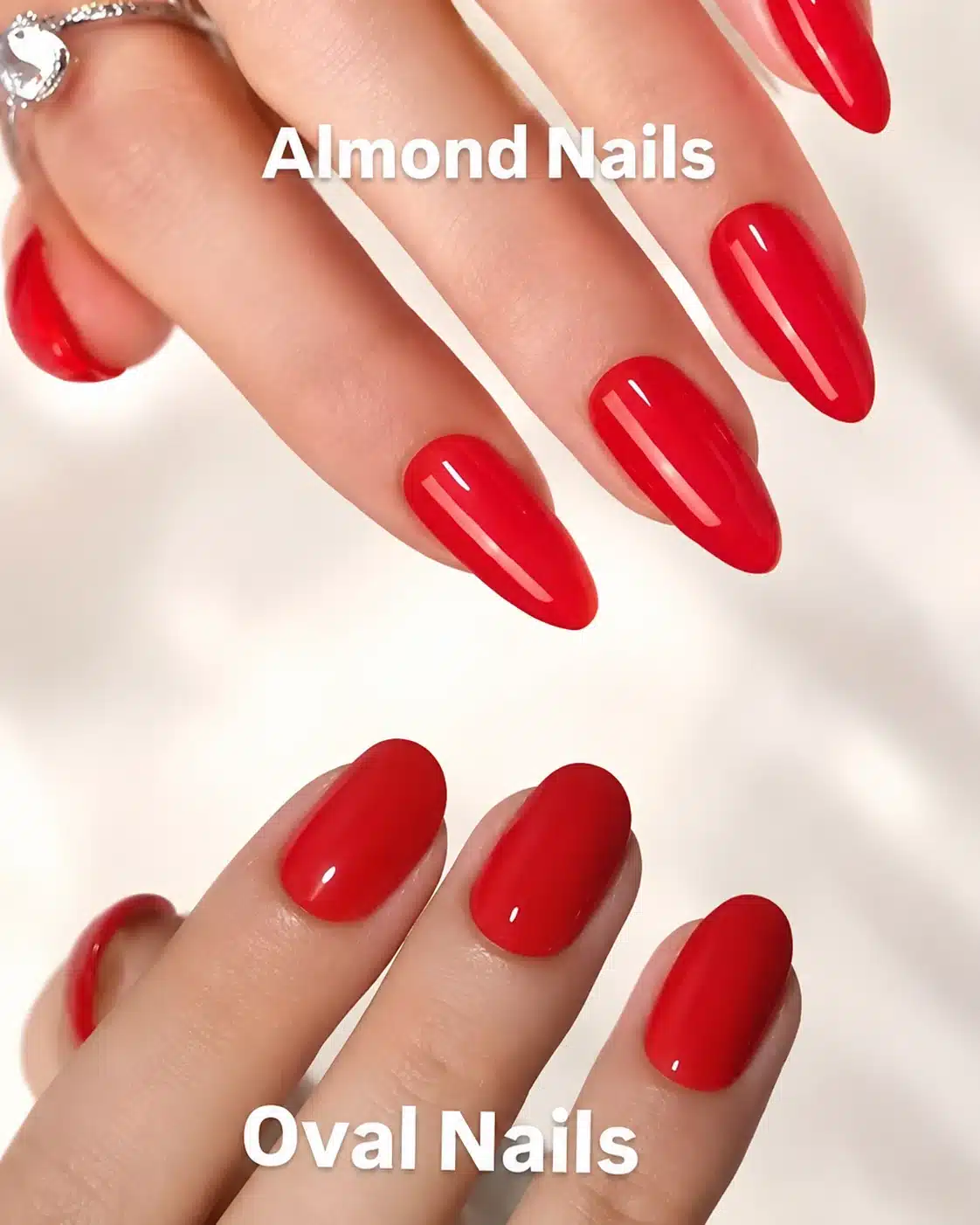
The difference becomes obvious when two nails have the same base color and similar length. Oval finishes with an even curve; almond draws the eye toward a center point. That change affects the visual mood, the minimum useful length, and how often the outline needs reshaping.
Shape and Appearance
Oval looks soft, natural, and understated. It lengthens the nail without making the tip feel narrow. Almond looks more sculpted and creates a stronger vertical line, so it often reads as elegant or editorial even with a simple nude finish.
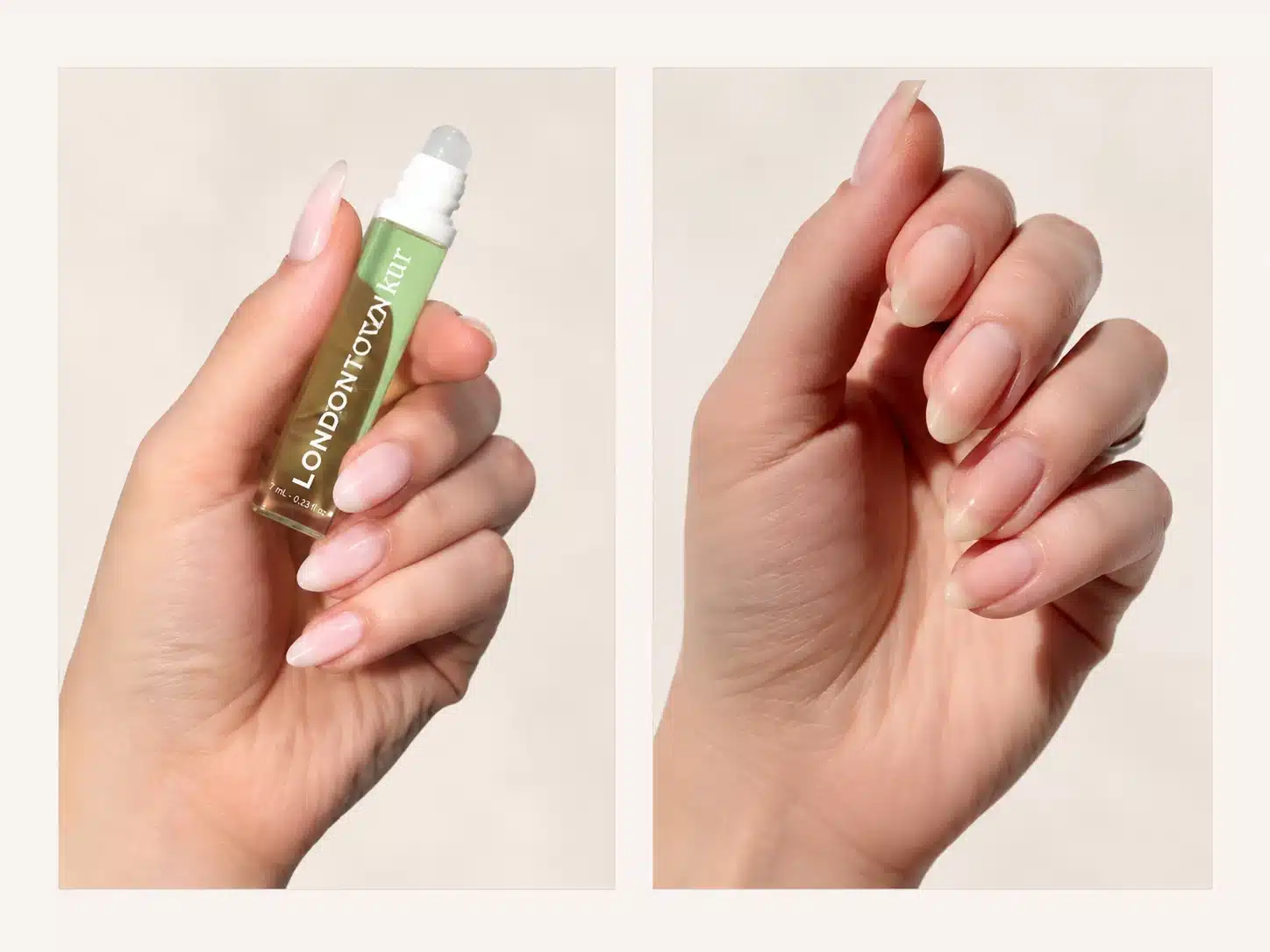
On wider nail beds, oval preserves a smoother transition between the natural width and the free edge. Almond can still look balanced, but the taper should begin gradually rather than cutting abruptly into the sides. On narrow nail beds, almond’s centered point becomes more visible with less dramatic filing.
Durability and Maintenance
No shape guarantees durability. Natural nail condition, length, preparation, product, and daily use all matter. Oval generally retains more material at the sides and tip, while almond removes more width to create its taper. That makes careful shaping especially important on thin or flexible nails.
Oval regrowth is usually forgiving because the rounded outline changes slowly. Almond may need more frequent refinement to keep the point centered as the nail grows. If one side is filed more aggressively than the other, the tip can twist visually or become weaker near the stress area.
Suitable Nail Length
Short natural nails can usually support oval because the shape needs only enough free edge to round the corners and establish a curve. Almond normally needs additional length so the taper develops gradually. When there is not enough free edge, the result may look triangular, pinched, or closer to a pointed oval.
Medium length is the easiest territory for both shapes. Long oval nails create a vintage, elongated curve, while long almond nails give more room for French tips, chrome, gradients, and detailed art. Extensions and press-ons can provide the length needed for almond, but the final size and curve still need to fit the natural nail correctly.
Quick Almond vs Oval Comparison
| Feature | Oval nails | Almond nails |
|---|---|---|
| Tip | Continuous rounded curve | Soft centered point |
| Sidewalls | Stay fuller | Taper inward |
| Useful length | Short to long | Usually medium to long |
| Visual mood | Natural and soft | Sculpted and elongated |
| Maintenance | Forgiving grow-out | Point needs symmetry |
Who Is Each Shape Best For?
Choose oval when you prefer short natural nails, want to keep more width at the free edge, or need a shape that transitions gently as it grows. Oval also suits readers who like understated polish and do not want the tip to become the main visual feature.
Choose almond when you have enough length for a gradual taper and want the manicure to create a stronger lengthening line. It is especially useful for designs that follow a centered tip, including V-shaped French art, aura gradients, and fine chrome outlines. The existing almond French tip guide shows how that point controls the placement of line work.
Finger width does not create a hard rule. On fuller or shorter fingers, either shape can look balanced when the length and taper are proportional. A soft almond can add a vertical line, while oval can preserve a natural curve without making the tip too narrow.
Nail Shape Products in One Place
These cards link to Amazon searches for similar options, not to claimed exact products. Choose sizes that fit the natural nail and follow the product instructions for application and removal.
Oval Press-On Nail Options
Useful for testing a rounded silhouette before changing your natural nail shape.
Almond Press-On Nail Options
Compare soft almond, baby almond, and medium almond lengths before choosing a salon shape.
Glass Nail File Options
A fine file gives more control when refining curves and checking side-to-side symmetry.
Oval vs Almond Nails: Which Should You Choose?
Start with your current free-edge length. If the nails are short and you do not want extensions, oval is usually the clearer match. If the nails extend far enough to taper without cutting into the supported sidewalls, almond becomes a realistic option.
Next, decide whether you want the silhouette to look natural or intentionally sculpted. Oval blends into the nail bed and keeps the curve broad. Almond makes the center point part of the design. Neither is automatically more sophisticated; execution and proportion determine the finished look.
Finally, consider your tolerance for maintenance. Oval can be refined with a consistent rounded motion as it grows. Almond requires regular checks from the front and above so the point remains centered. If you frequently chip or split at the sides, do not force a narrow taper simply to match a trend photo.
Oval, Almond, and Baby Almond Compared
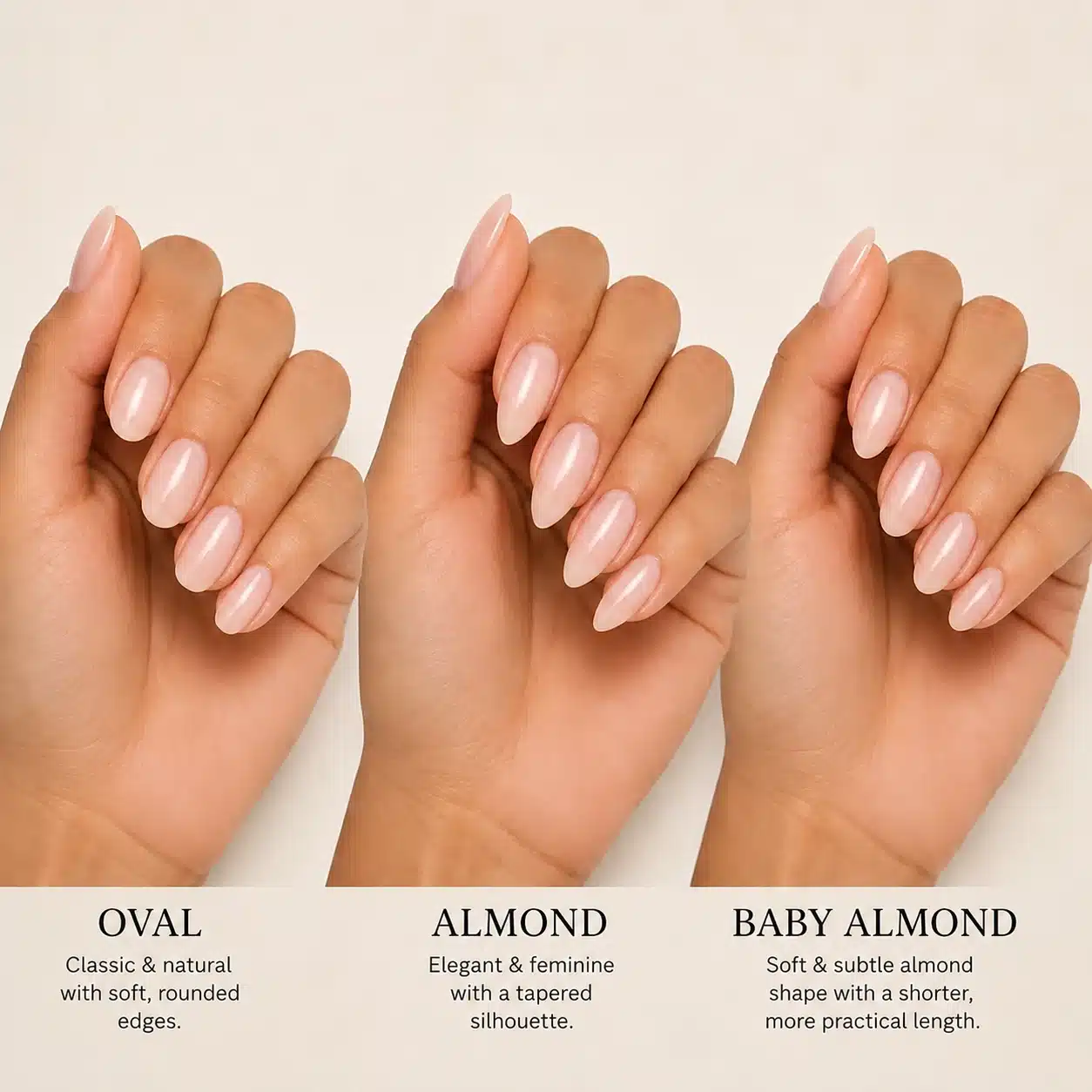
Baby almond is the compromise between a full oval and a medium almond. It has more visible taper than oval but ends in a shorter, rounder point than classic almond. This makes it useful when you want the almond mood without the length of an extension.
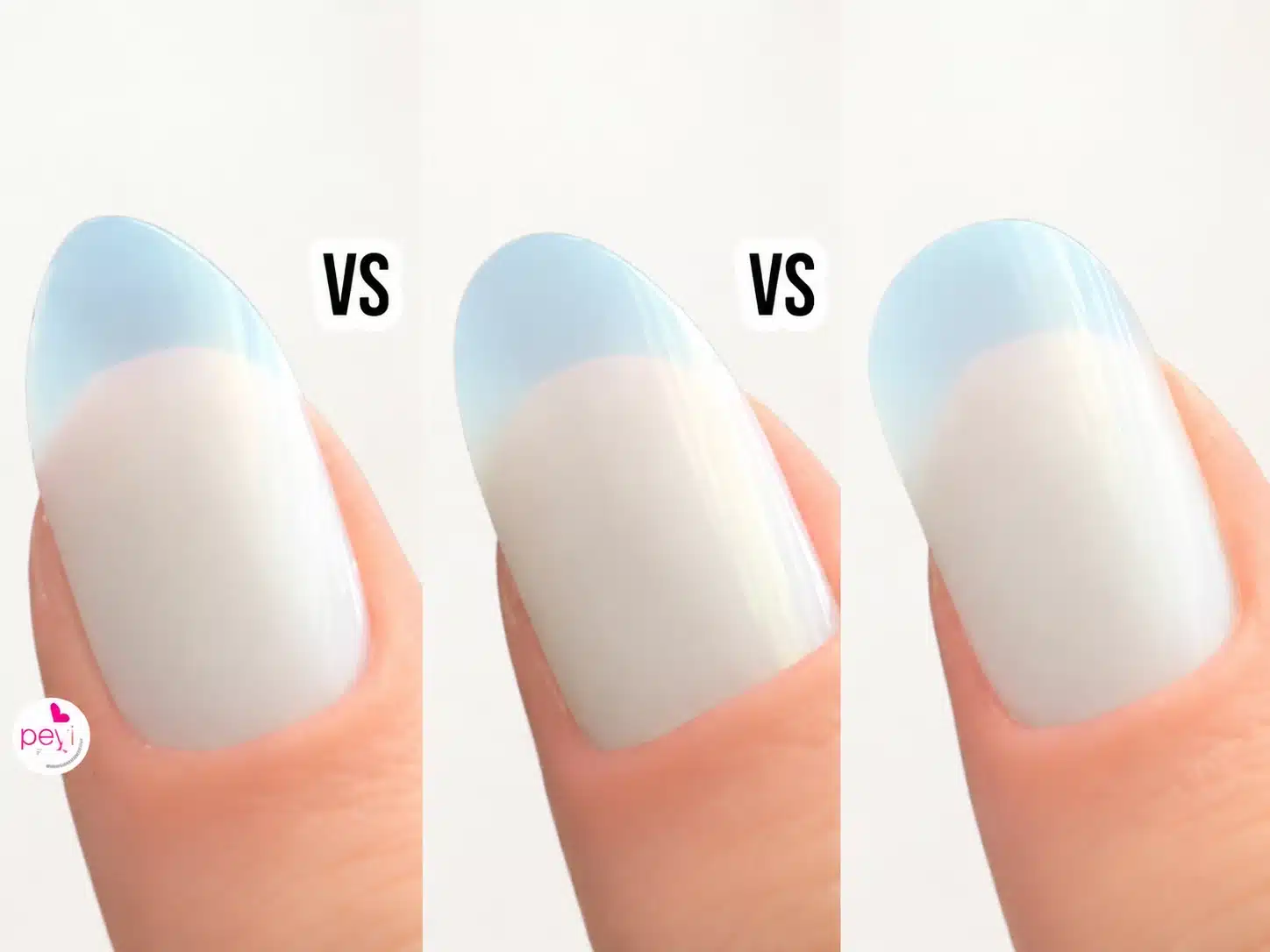
The name is not standardized across every salon, so show a picture rather than relying on “baby almond” alone. Ask the technician to keep the sidewalls supported, create a subtle center point, and avoid a sharp stiletto finish. For more visual references inside the same family, use the almond nail design collection.
Best Designs for Oval and Almond Nails
Sheer pink, nude, red, and milky polish work on both shapes because they reveal the silhouette clearly. On oval, follow the rounded tip with a curved micro French line. On almond, let the French band narrow slightly toward the center point so it reinforces the taper.
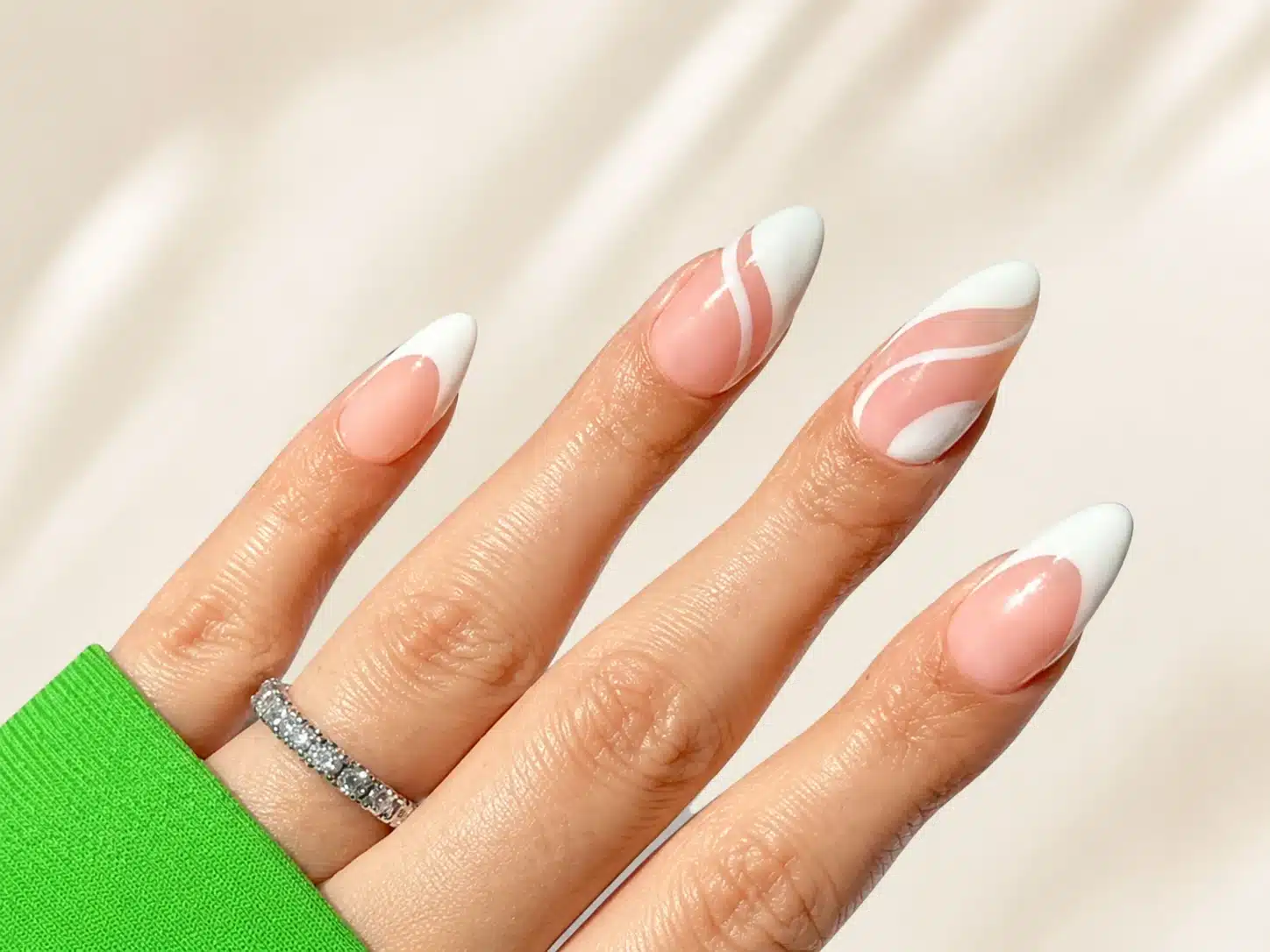
Floral and abstract designs behave differently on the two shapes. Oval provides a broader canvas near the tip, which is useful for scattered motifs. Almond naturally guides vertical lines, diagonal swirls, and centered accents. For a bolder almond example, compare the placement used in this red cheetah almond nail inspiration.
How to Shape Oval Nails
Begin with enough free edge to remove the corners without filing into the surrounding skin. Work from each outer edge toward the center, alternating sides so the curve stays even. The highest point of the arc should align with the center of the finger.
Do not saw aggressively back and forth. Use controlled strokes, pause frequently, and compare every nail from above. Keep the curve consistent while respecting small differences in natural width. The American Academy of Dermatology’s healthy nail guidance also supports gentle care, moisturizing, and avoiding habits that damage the nail.
How to Shape Almond Nails
Mark or visualize the center of the free edge first. File one sidewall toward that point, then repeat on the other side using the same number and angle of strokes. Stop before the point becomes sharp, and round the final millimeters into a soft peak.
Check the nail from the front to make sure the peak is not leaning left or right. If the natural nail is too short, do not keep removing the sides in an attempt to manufacture a taper. Choose soft almond, oval, or a correctly fitted extension instead. Readers considering a temporary test can compare the proportions in this almond press-on nail example.
What to Ask for at the Salon
For oval, say: “I want a soft oval with full sidewalls and one continuous rounded free edge—no center point.” For almond, say: “I want a balanced almond with gradual tapering and a soft rounded peak, not a sharp stiletto.”
Bring the comparison photo that most closely matches your preferred length. Clarify whether you want natural nails, an overlay, extensions, or press-ons, then show the exact tip width. The same word can produce different results across salons, but a clear image limits ambiguity.
Frequently Asked Questions about Almond vs Oval Nails
Should I get almond or oval nails?
Choose oval for a softer rounded outline that works easily at short or medium length. Choose almond when you have enough free edge for a gradual taper and want a more sculpted center point.
Which nail shape is more attractive?
Attractiveness is subjective. Oval looks natural and balanced; almond creates a stronger lengthening effect. The better-looking option is the one filed symmetrically and proportioned to your nail beds and desired length.
What is the hottest nail shape right now?
Shape trends change, and popularity alone should not determine how much natural nail is removed. Almond remains widely used in editorial and social nail inspiration, while short oval and soft almond are practical variations of the same rounded family.
Which nail shape is the healthiest?
No shape is universally healthiest. A conservative length, smooth edges, supported sidewalls, gentle filing, and correct product removal matter more than the label. Avoid forcing a narrow almond taper onto nails that do not have enough free edge.
Are oval nails stronger than almond nails?
Oval generally retains more width through the tip, but strength depends on the natural nail, length, structure, product, and daily use. Almond can wear well when it is balanced and not over-filed at the sides.
Can short nails be almond shaped?
Yes, but the result may be a soft or baby almond rather than a classic elongated almond. Very short nails often suit oval better unless a correctly fitted extension supplies additional length.
Final Verdict
Oval and almond nails are close relatives, not interchangeable labels. Oval keeps a continuous rounded curve and works naturally at shorter lengths. Almond narrows through the sides and finishes at a soft center point, creating a more sculpted silhouette that usually needs additional free edge.
Choose the shape your nails can support without aggressive filing. If you want easy short-length wear, start with oval. If you want visible taper and have enough length, choose almond. When you fall between the two, baby almond or soft almond provides the most practical compromise.
Try next: milky almond nail ideas | classic almond French tips | soft pink almond nails | nail inspiration