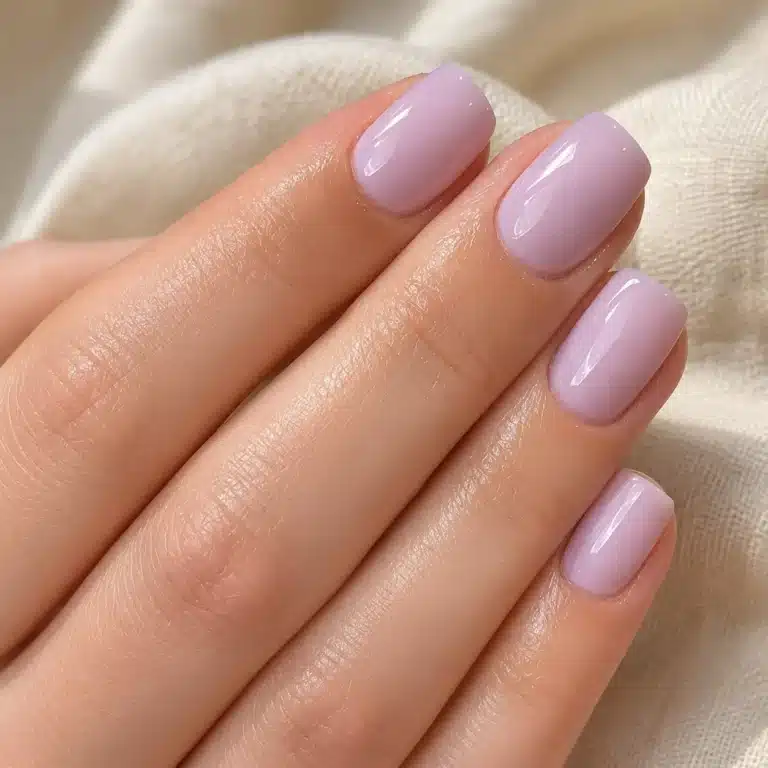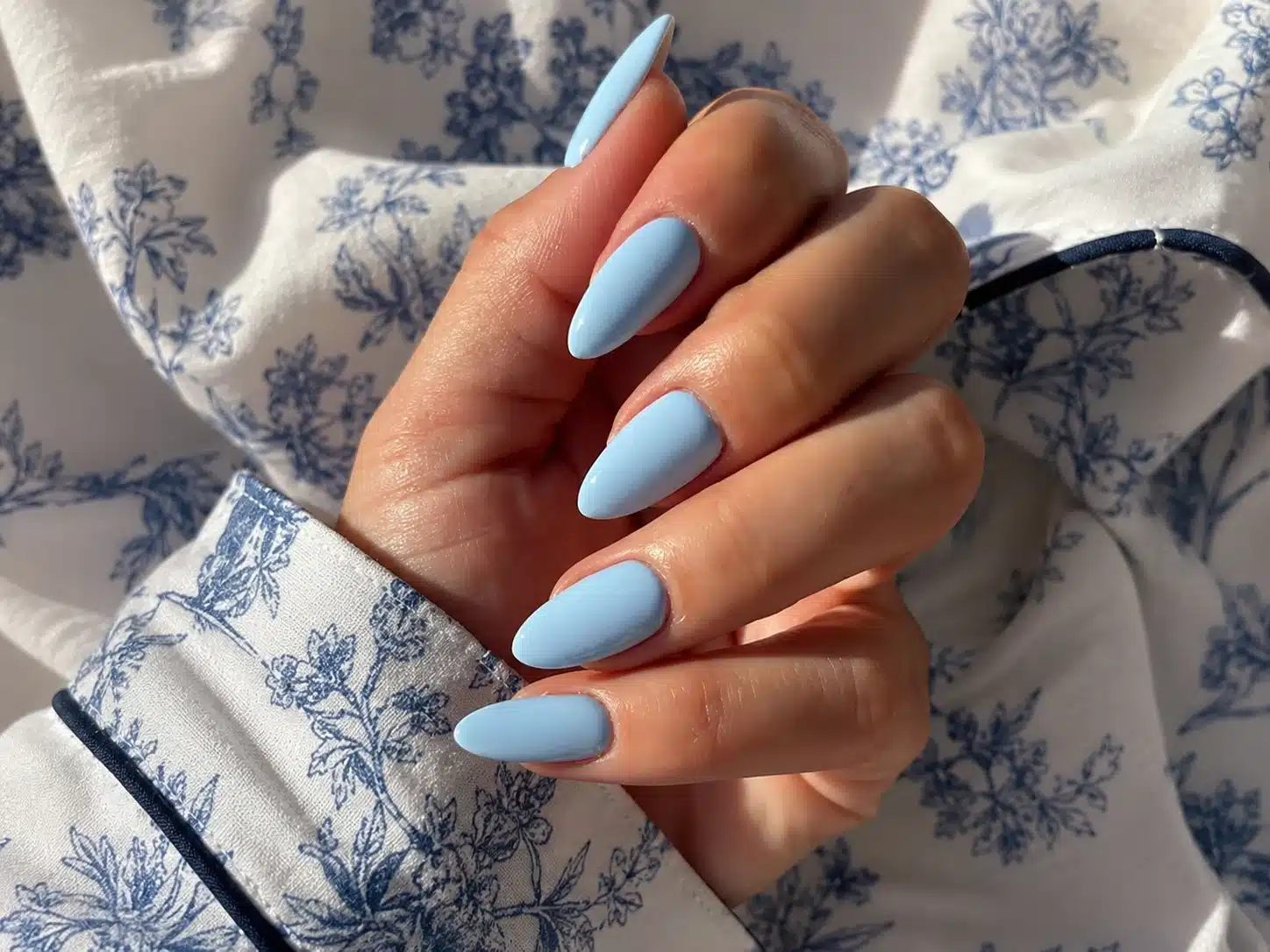
Milky blue nail polish softens blue with a creamy, clouded finish that can be sheer, jelly-like, or gently opaque. It feels lighter than navy and less flat than a standard pastel, giving the manicure the airy look of blue mixed with a veil of white.
This guide covers the exact shade, how to build it smoothly, how to make a traditional lacquer version safely, and ten wearable looks for short, square, and almond nails. Each idea includes its own preparation and application sequence, so the result is practical rather than inspiration without instructions.
Key Takeaways
- Milky blue describes both a pale blue color and a softened, creamy or semi-sheer finish.
- Thin layers create more depth and fewer streaks than one heavy coat.
- Traditional lacquers can be mixed only when their formulas are compatible; uncured gels should not be mixed without manufacturer guidance.
- Pearl, ombre, micro French, flowers, marble, and chrome all work over a milky blue base.
What Is Milky Blue Nail Polish?
Milky blue nail polish sits between pastel blue and translucent jelly polish. The blue pigment is softened by white, clear, or a cloudy base, so the nail retains dimension instead of looking covered by a dense block of color. Depending on the formula and number of coats, it can appear almost white, true baby blue, cornflower blue, or pale periwinkle.
The finish is what separates it from ordinary light blue. A standard baby blue may be fully opaque after one or two coats, while a milky blue usually looks diffused and buildable. If you want to compare that effect with other translucent finishes, the sheer milky nail polish guide explains how cloudy coverage changes across white, pink, nude, and tinted shades.
Milky blue also supports the editorial angles that make blue manicures useful rather than seasonal: a single glossy color, pearl shine, an aura gradient, micro French tips, delicate white flowers, soft marble, misty clouds, or a chrome layer. The result can be quiet and minimal or more detailed without losing the airy base.
If wear time is the deciding factor, compare the preparation and removal requirements in this milky pink gel nail polish guide before choosing gel instead of traditional lacquer; the color family changes, but the product-system decision is the same.
How Do You Get Milky Blue Nails?
The simplest method is to use a premixed milky blue lacquer or gel. Choose the product type first because traditional lacquer air-dries, while gel needs the compatible base, top coat, lamp, and cure time specified by its manufacturer. Do not treat those systems as interchangeable.
Start with clean, dry nails shaped before color application. Apply a base coat that suits the polish system, then build the blue in thin layers. One coat gives a sheer wash, two usually reveal the intended milk-blue color, and a third may create creamier coverage if the product instructions allow it. Finish with gloss for a glassy look or with the compatible pearl or chrome product required for that design.
For a broader visual reference before choosing your exact shade, compare these soft light blue nail ideas and note which examples lean icy, grey, lavender, or cornflower.
How Do You Make Milky Blue Nail Polish?
For traditional air-dry lacquer, place several drops of white or clear polish on a disposable palette and add one very small drop of blue from a compatible formula. Mix with a clean dotting tool, test the color on a swatch, and adjust gradually. More white creates a creamy pastel; more clear creates a translucent jelly effect.
Keep track of the ratio if you want to reproduce the color. Mix only enough for the current manicure unless you have an empty polish bottle designed for storage. Do not return a custom mixture to the original bottle, because that permanently changes the shade and formula.
Do not improvise by mixing unrelated uncured gel products. Different gel systems may use different lamps, cure times, and ingredients. Use a premixed gel shade or follow the manufacturer’s compatibility instructions instead.
10 Milky Blue Nail Polish Ideas With Practical Steps
1. Classic Two-Coat Milky Blue Manicure
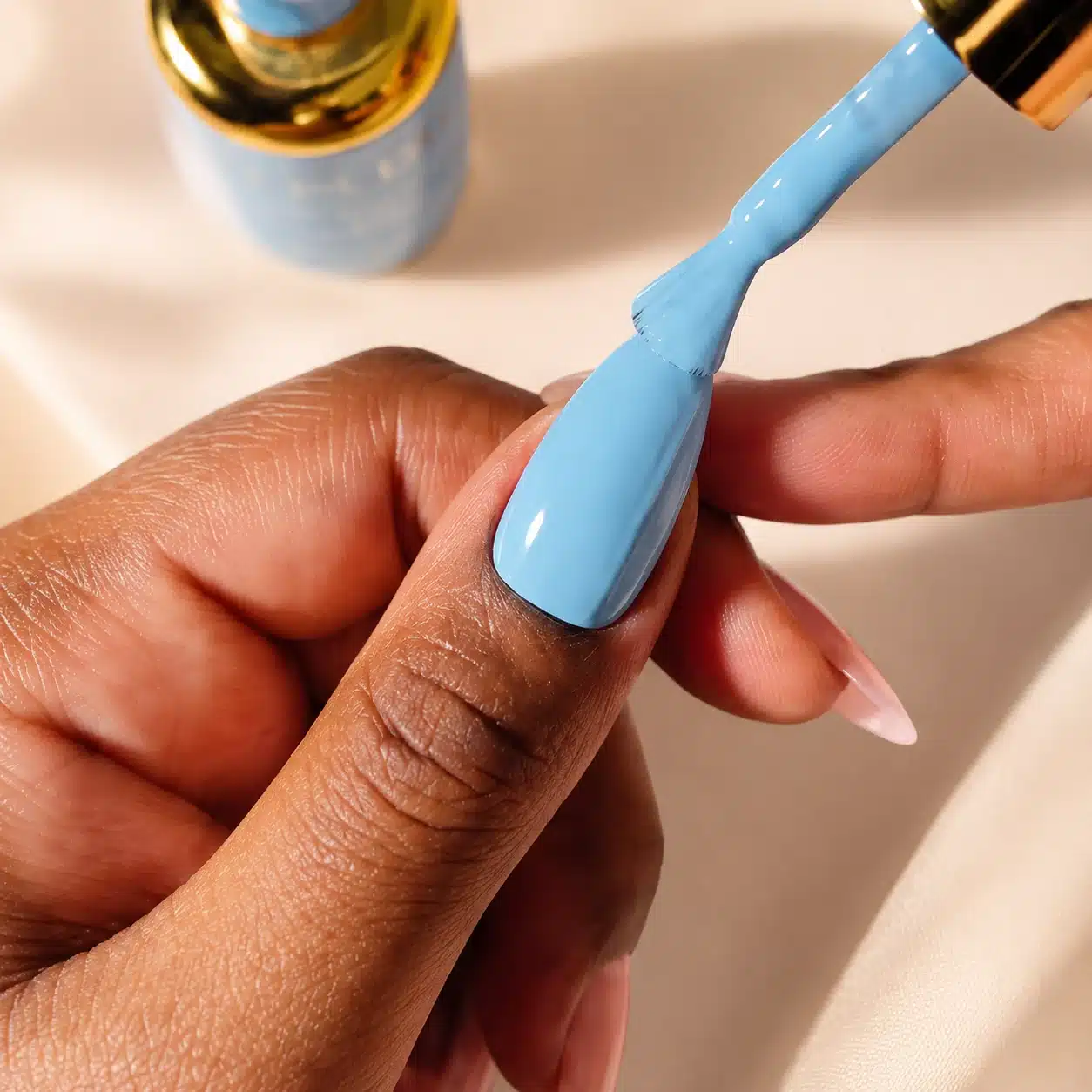
This is the cleanest starting point: a softly squared or rounded nail, two controlled coats of creamy blue, and a reflective top coat. It shows the color without relying on extra art.
- Prep: Shape the nails, lightly smooth only obvious ridges, and remove dust and surface oil.
- Base: Apply one thin base coat and allow it to dry or cure according to the system.
- Color: Place the brush just below the cuticle and pull the first coat toward the free edge in three light strokes.
- Coverage: Add a second thin layer after the first is ready; avoid repeatedly brushing color that has started to level.
- Finish: Seal the surface and free edge with a compatible clear top coat.
Affiliate disclosure: This article contains Amazon affiliate links. As an Amazon Associate, InspoNails may earn from qualifying purchases at no additional cost to you. Prices, ratings, and availability are not stated because they can change.
DND DC Gel Polish Set — 031 Milky Blue
This exact duo contains UV/LED gel polish and matching air-dry lacquer in DND DC shade 031 Milky Blue. Use each component according to its own instructions.
2. Pearlescent Milky Blue Almond Nails
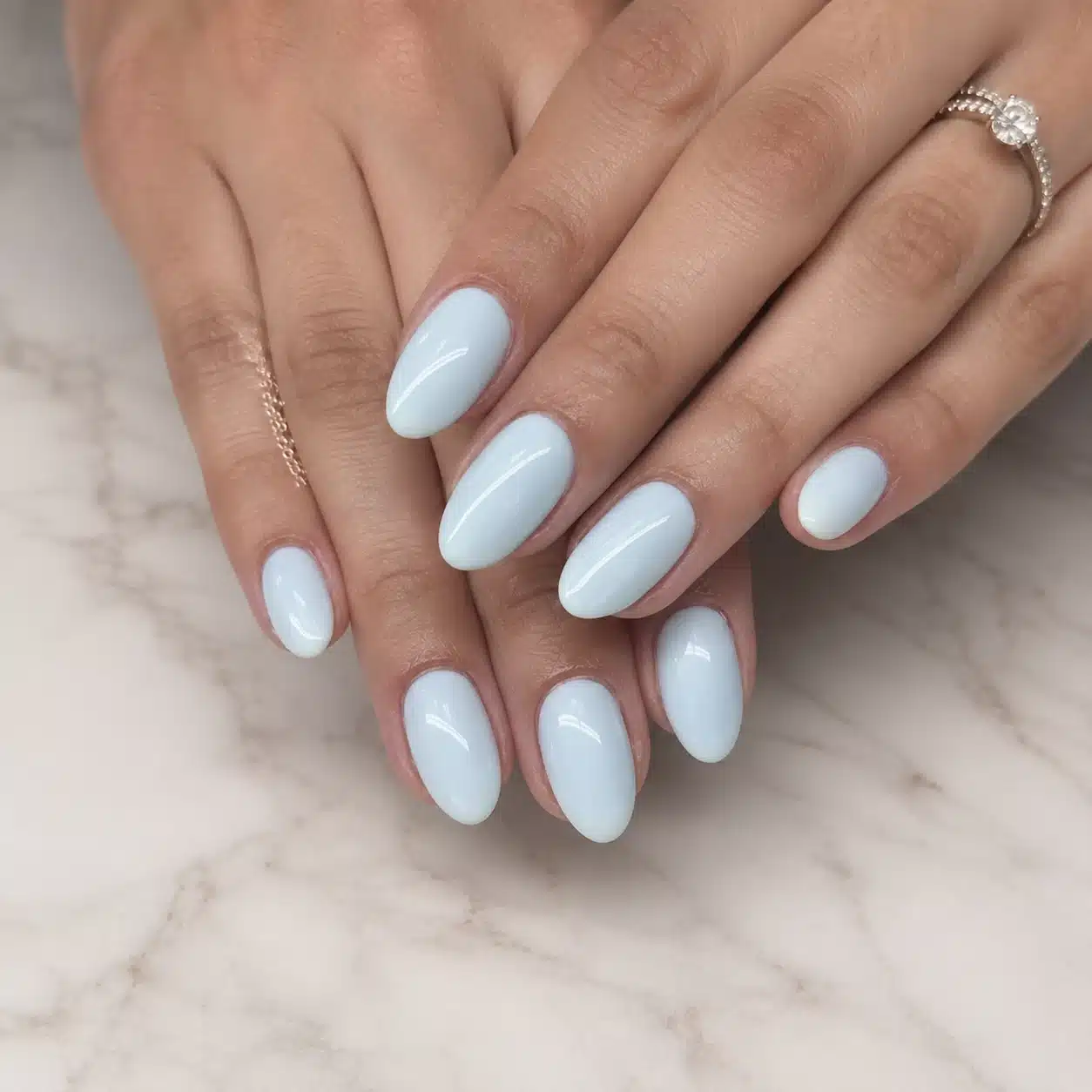
Pearl reflection makes the blue look lighter at the center and deeper around the sides. The elongated almond shape lets that shift travel smoothly across the nail.
- Shape: File the sidewalls evenly and taper toward a soft point without thinning the natural nail.
- Foundation: Apply a sheer milky blue base in one or two coats, keeping the color slightly translucent.
- Pearl layer: Use a compatible pearlescent topper or fine shimmer polish rather than loose craft glitter.
- Placement: Float the pearl layer down the center first, then use the remaining product toward the sides.
- Finish: Add top coat only when the previous layer is ready, preserving the smooth reflective surface.
The glow is subtler than a mirror finish. For a stronger reflective option, compare it with these soft chrome nail looks before deciding between pearl and chrome.
3. Icy Milky Blue Polish on Deep Skin
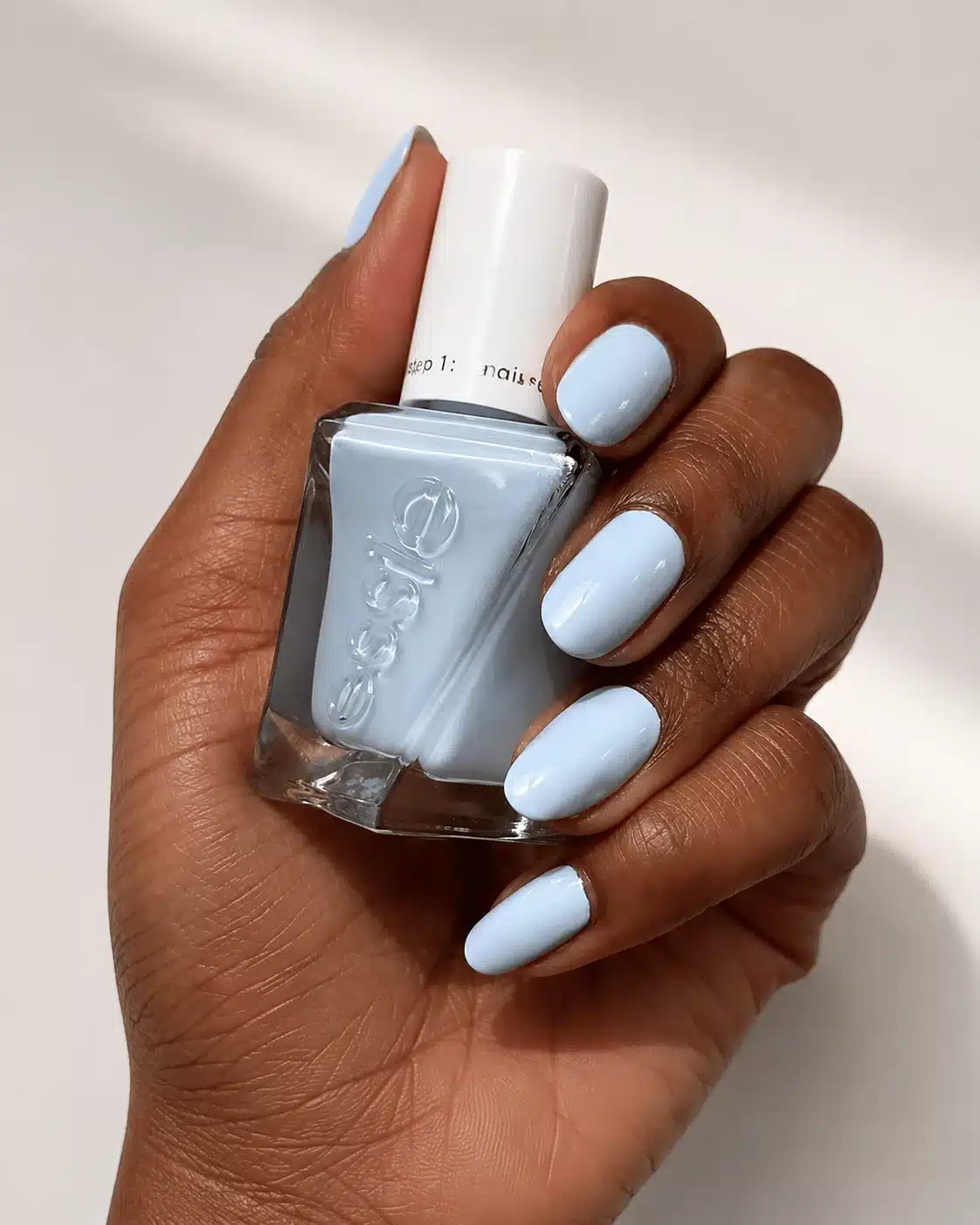
An icy blue can create crisp contrast on deep skin, while a cloudy base keeps the shade softer than opaque powder blue. A short rounded-square shape lets the color remain the focal point.
- Tone test: Paint a swatch and hold it next to the skin in daylight; check whether the blue reads icy, grey, or lavender.
- Prep: Keep the short free edges even and clear the plate of moisturizer before the base coat.
- Color: Apply a translucent first layer, then use the second to correct any patchy areas.
- Cuticle line: Leave a narrow clean border rather than pushing pale polish onto the skin.
- Finish: Choose gloss for higher contrast or a soft pearl topper for a diffused result.
4. Glassy Square Milky Blue Nails
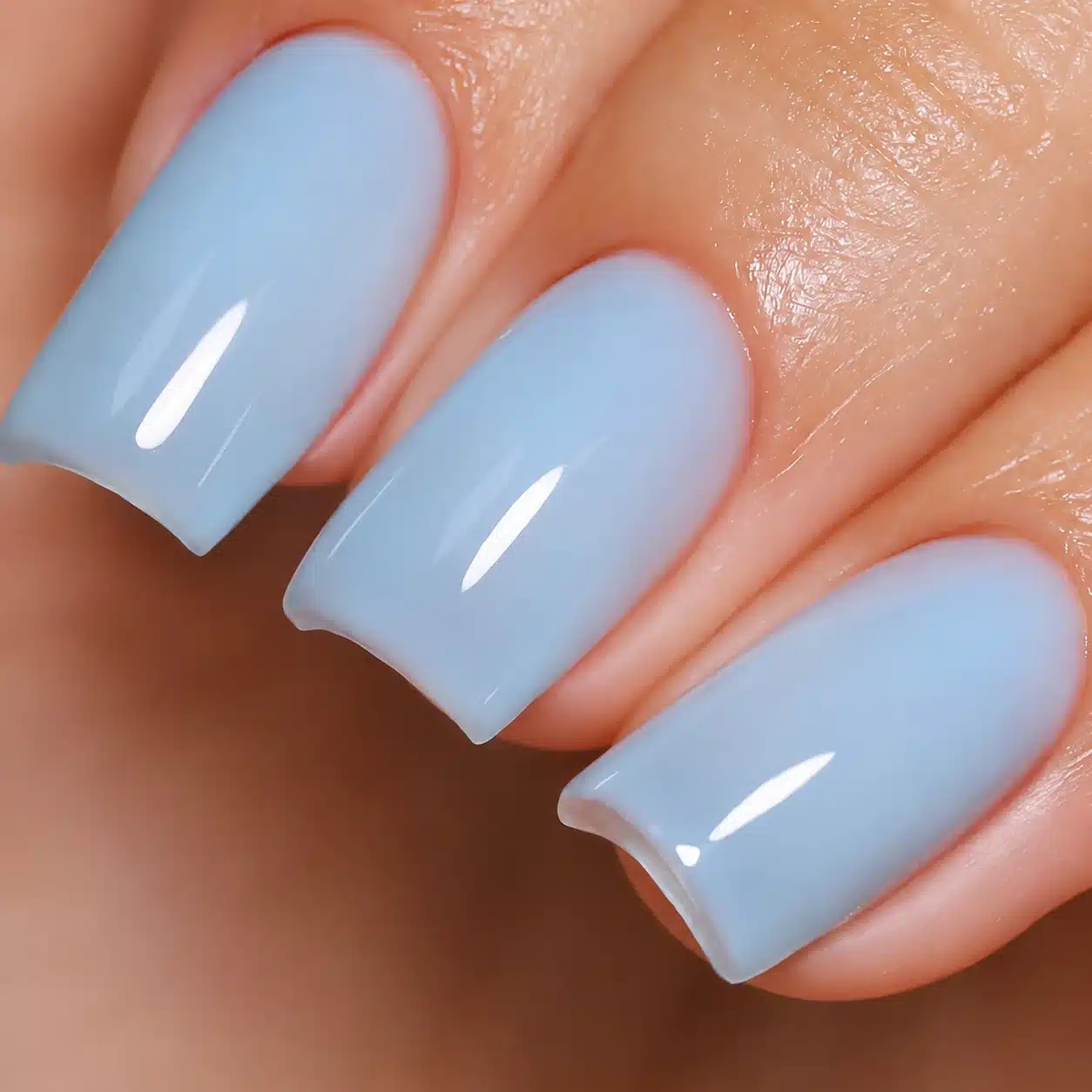
The straight free edge and broad surface make every reflection visible. The key is symmetrical shaping and a top coat that levels without creating a thick ridge.
- Shape: Match the length and corners across all nails before applying color.
- Smooth: Use a ridge-filling base only if it is compatible with the chosen lacquer.
- Color: Build two thin coats, keeping slightly less product at the cuticle and sidewalls.
- Edge: Run a small amount across the free edge to reduce visible wear without making it bulky.
- Gloss: Float top coat over the surface with light pressure so the brush does not leave grooves.
5. Sheer One-Coat Milky Blue Nails
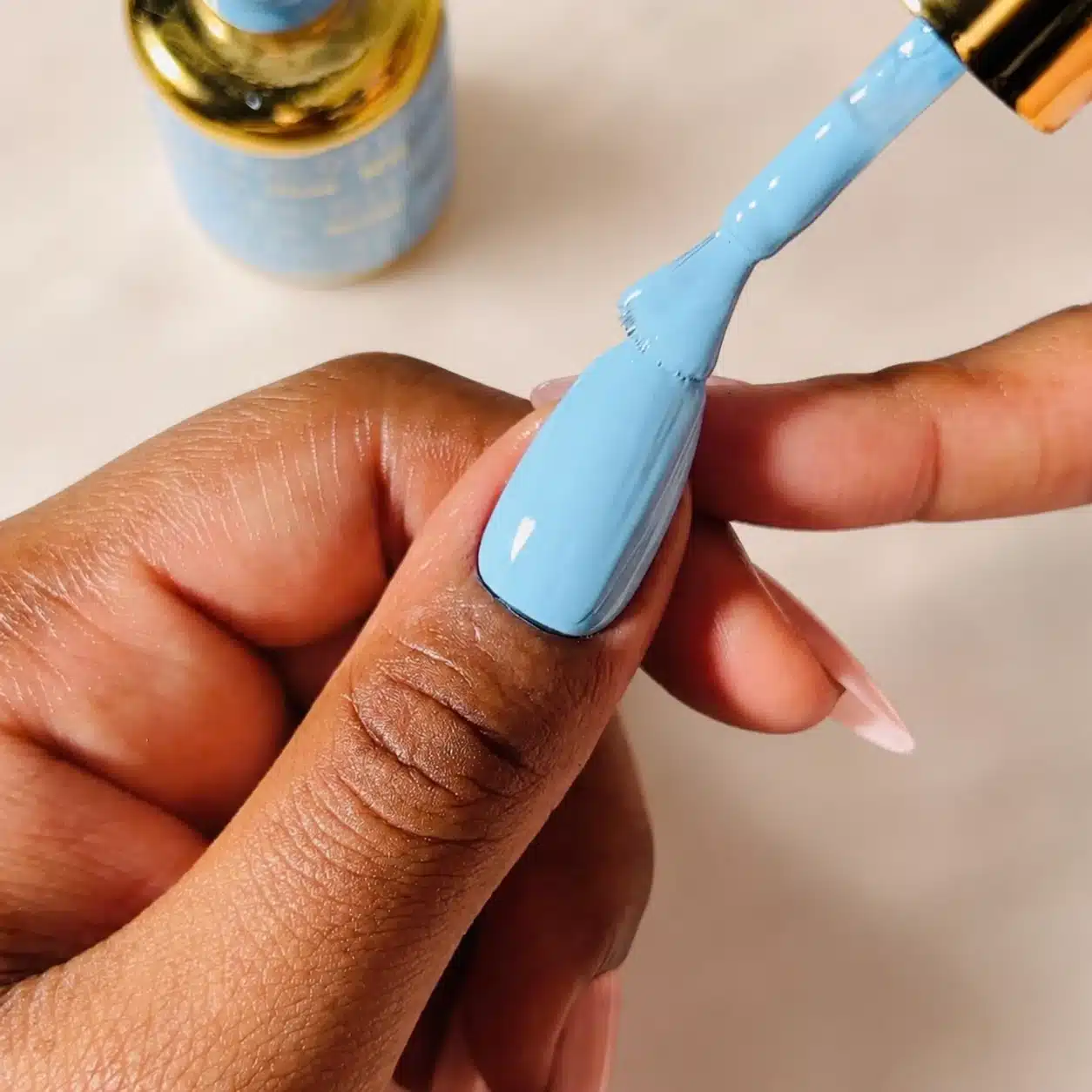
One coat creates the closest thing to a blue nail tint. The natural nail line remains visible, so preparation and stain-free nails matter more than they do under opaque color.
- Prep: Remove old color completely and address surface staining before applying a translucent shade.
- Base: Select a clear or color-correcting base that does not turn the blue green or overly grey.
- Application: Load the brush lightly and complete each nail in as few strokes as possible.
- Leveling: Give traditional lacquer time to settle rather than brushing repeatedly through the wet film.
- Finish: Add a clear glossy top coat for a smooth jelly-like result.
If you prefer this translucency but want a neutral rather than blue finish, best milky white nail polish options cover the closest color family.
6. Soft Almond Milky Blue Nails
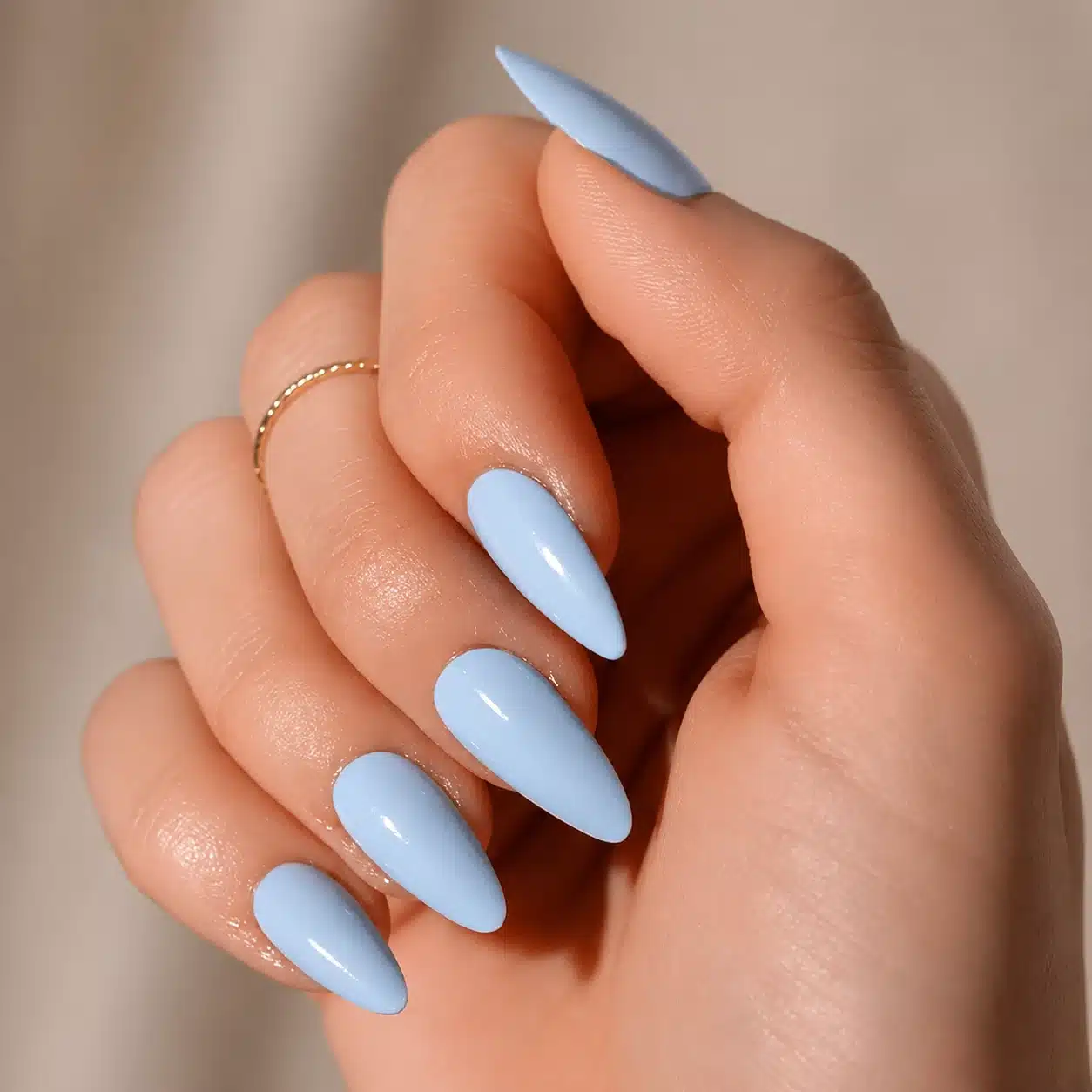
Medium almond nails make a simple blue manicure feel more fluid and polished. A slightly muted cornflower or periwinkle undertone prevents the length from feeling overly sweet.
- Shape: Establish the center point first, then alternate sides to keep the almond balanced.
- Base: Use a smoothing coat that supports the chosen nail length.
- Color: Apply the blue from center to sides, following the direction of the almond shape.
- Optional detail: Add one tiny white dot near the cuticle or leave the manicure monochrome.
- Finish: Seal with gloss and clean any polish from the sidewalls before it dries or cures.
7. High-Shine Creamy Blue Square Nails
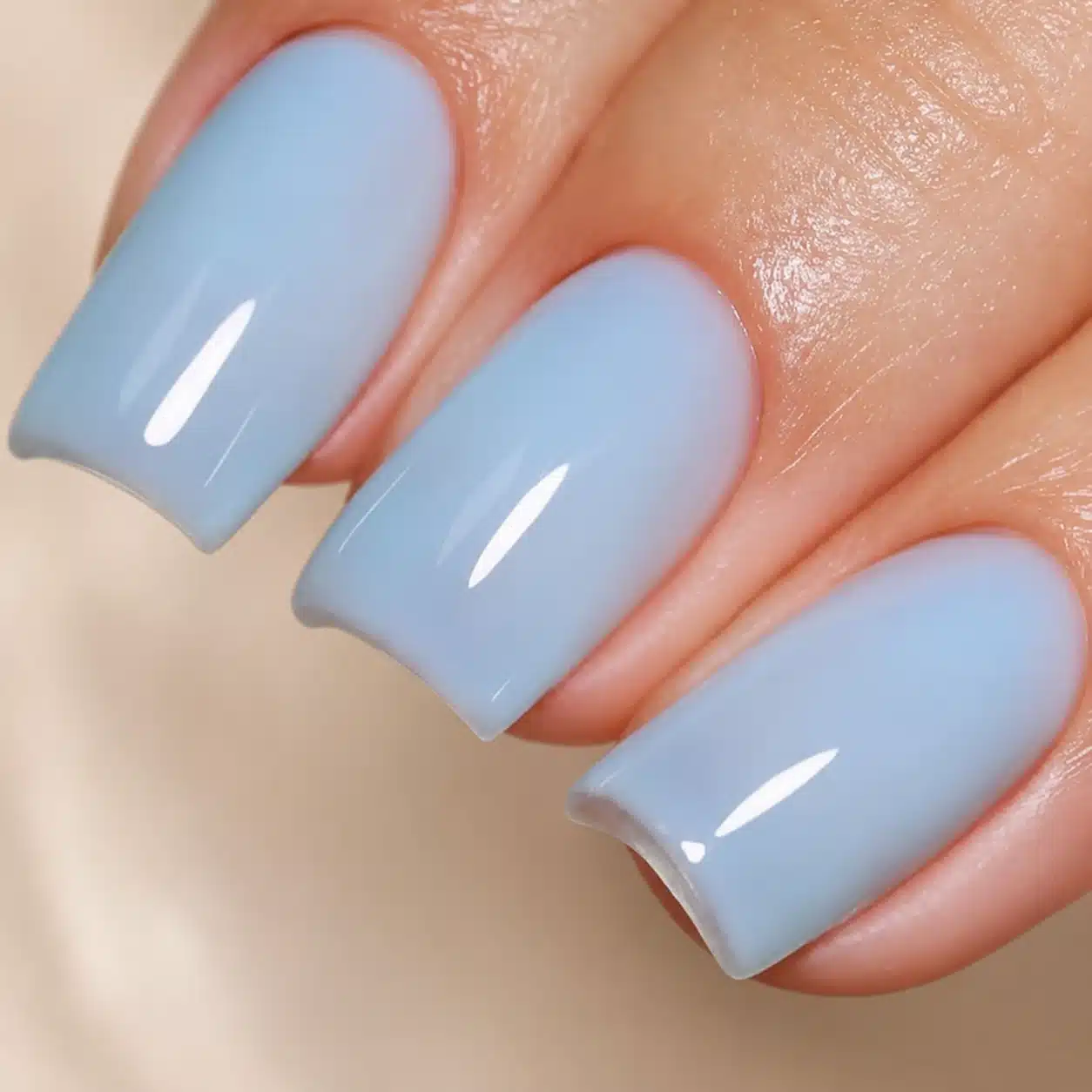
This version uses fuller coverage than the sheer look but keeps a soft, milk-mixed blue rather than a saturated cobalt. It works well when you want color that still behaves like a neutral.
- Prep: Shape and clean the nail carefully because pale cream colors reveal uneven edges.
- First layer: Apply a thin blue foundation and let it become fully ready for the next coat.
- Second layer: Use enough product to level streaks but not enough to flood the cuticle.
- Inspection: Turn the hand sideways under light and check for bare spots before top coat.
- Seal: Apply a clear top coat across the center, sides, and free edge.
Sally Hansen Insta-Dri Clear Top Coat
A clear air-dry top coat for sealing traditional lacquer. It is not a substitute for the required top coat in a UV/LED gel system.
8. Milky Blue With White Flower Details
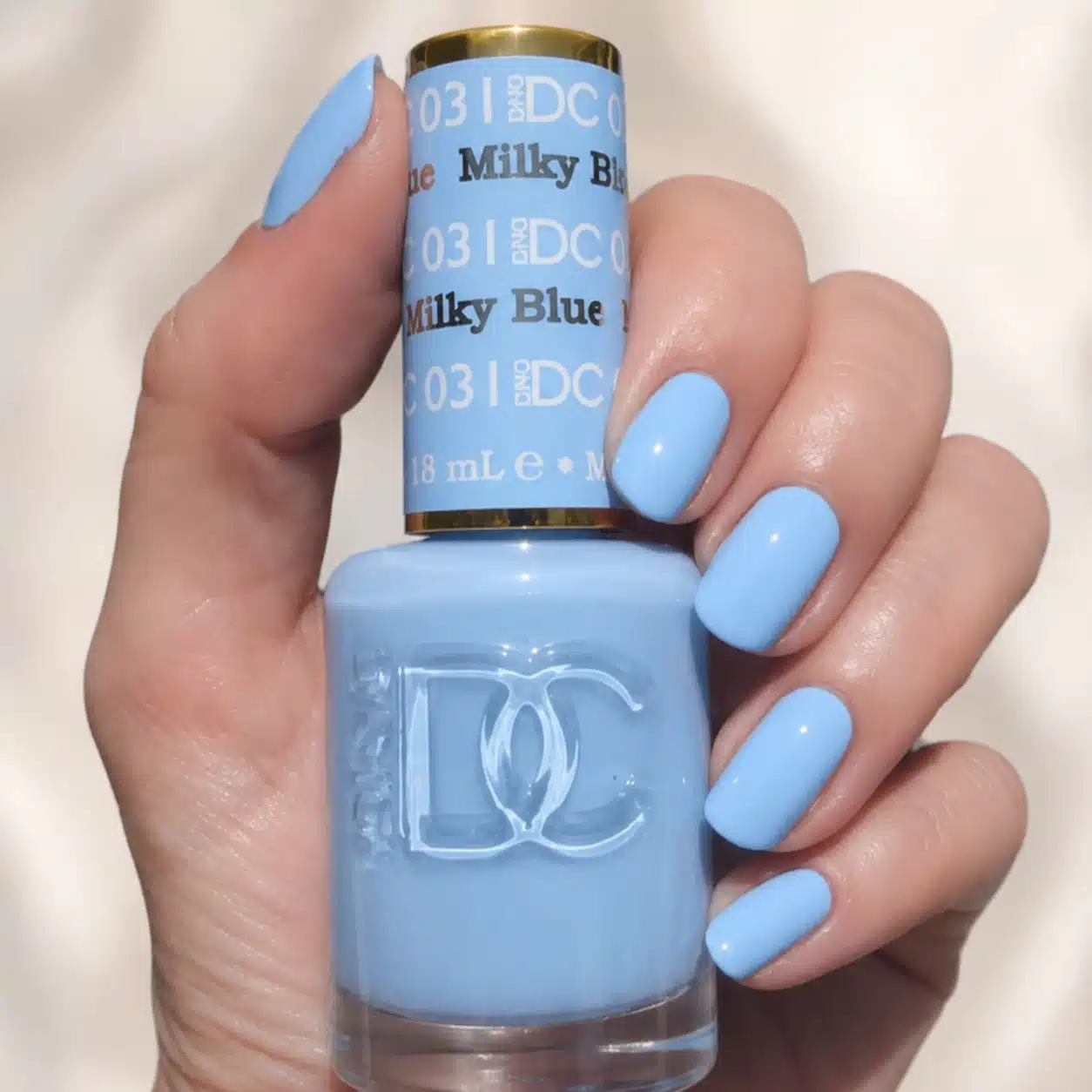
Small white flowers echo the softness of the blue base. They can be placed on one accent nail or spaced sparingly across the set, avoiding the crowded effect of large decals.
- Base: Complete and dry or cure the milky blue layers before starting the design.
- Tool: Use a dotting tool for petals and a fine liner for stems or leaves.
- Placement: Make five small white dots in a circle, leaving room for a contrasting center.
- Balance: Repeat the flower only on selected nails, varying its position rather than copying a rigid pattern.
- Finish: Protect the design with a top coat that is compatible with every layer underneath.
Komall Metallic Nail Art Liner Brush Set
Fine detail brushes for small petals, stems, clouds, marble lines, and slim French tips over the milky blue base.
For another placement pattern using this color family, the baby blue French tip designs show how negative space keeps pale blue crisp.
9. Milky Blue Ombre or Aura Accent
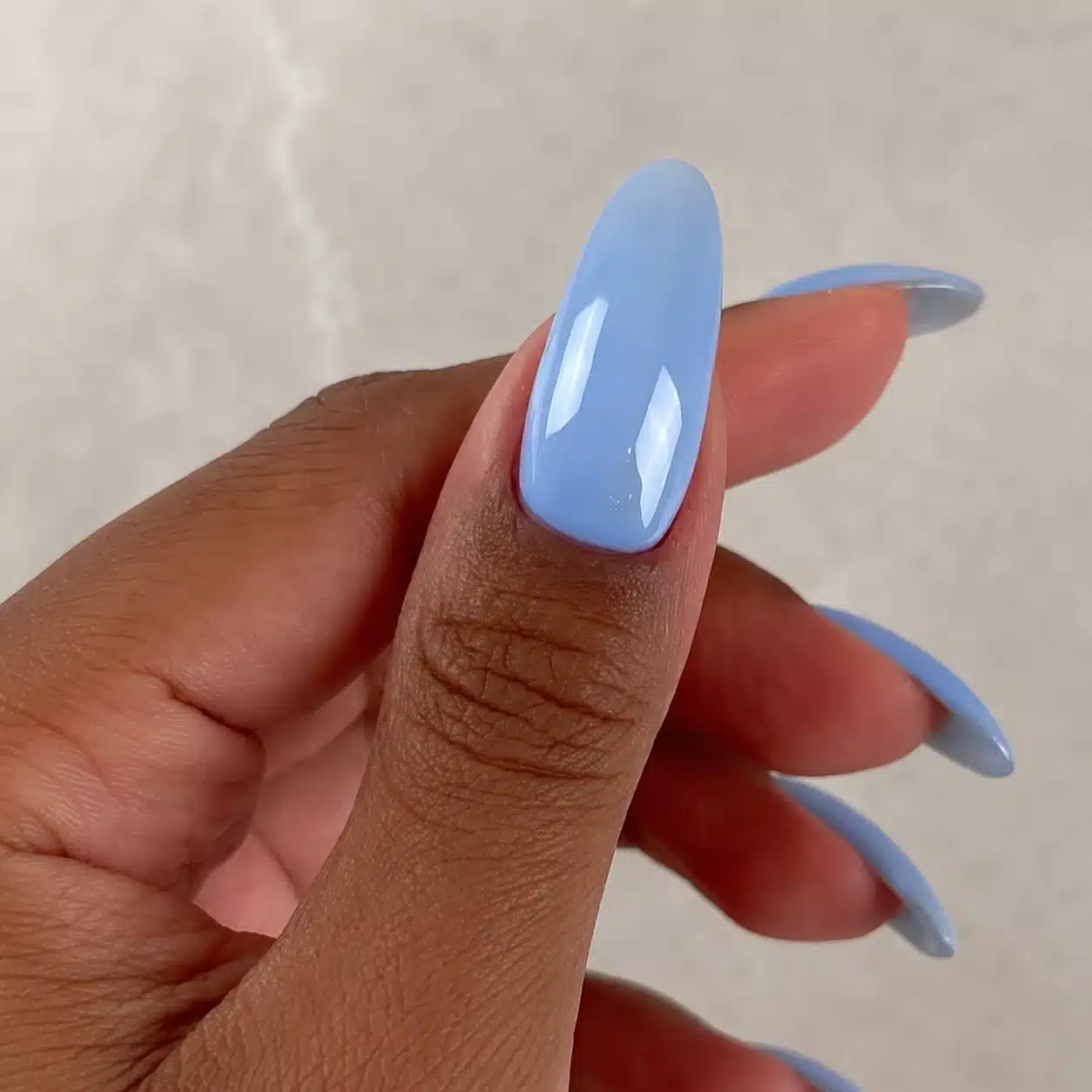
An ombre shifts from a soft nude or white base into blue, while an aura design concentrates the blue glow near the center. Both create movement without adding a separate motif.
- Base: Apply a pale neutral or very sheer blue foundation and allow it to set.
- Gradient: Place blue and the base shade on a cosmetic sponge for traditional lacquer, then dab lightly in several passes.
- Aura option: Use a small sponge to place blue at the center, keeping the outer edge cloudy and soft.
- Cleanup: Protect surrounding skin before sponging and remove residue promptly.
- Finish: Use top coat to visually blend the transition and smooth the textured application.
10. Short Milky Blue Micro French Nails
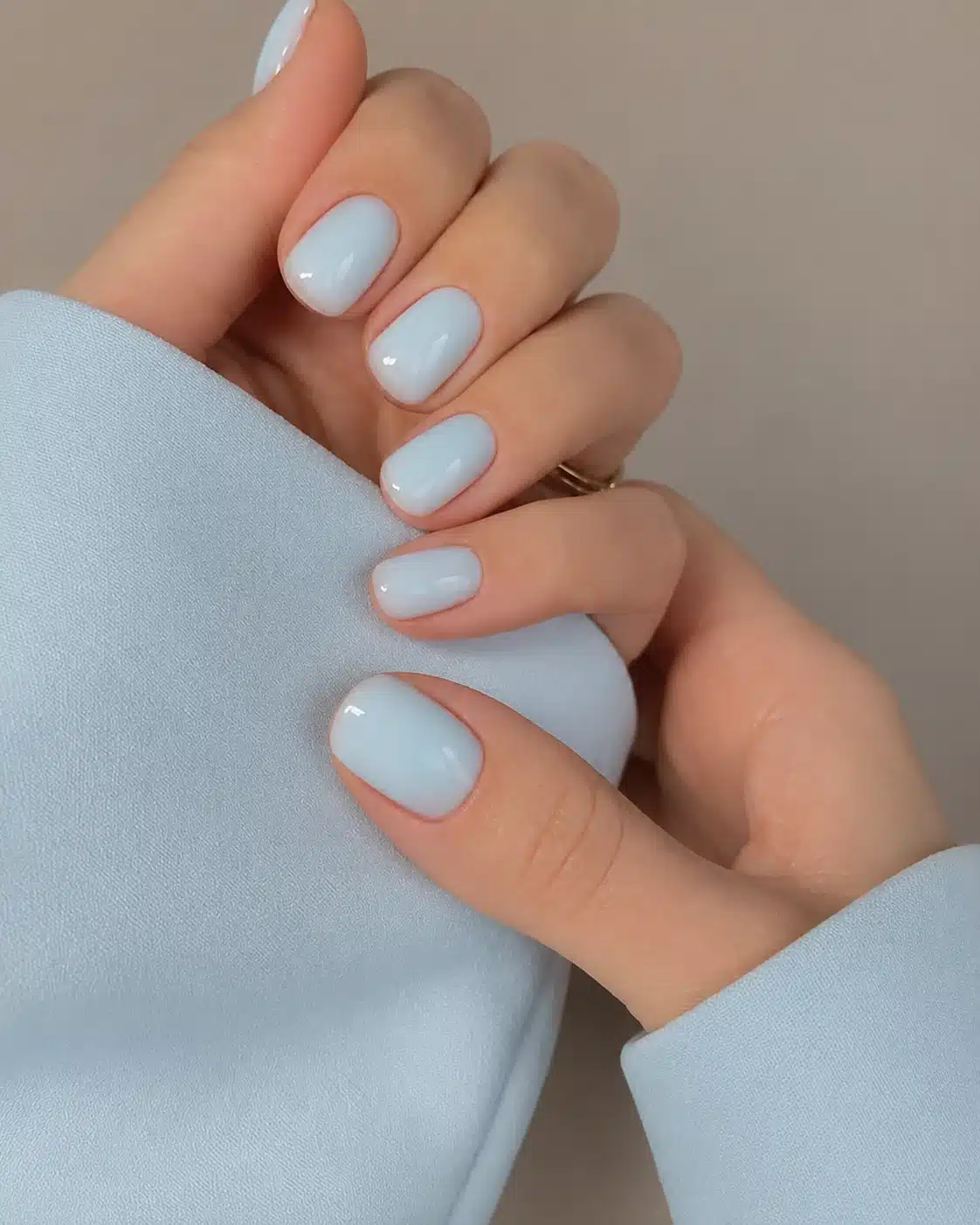
Short nails can wear the color as a full coat or as a narrow blue edge over a neutral base. A micro tip keeps enough negative space visible to prevent the nail from looking shorter.
- Shape: Use a short oval or soft square and make the free edges consistent.
- Base: Apply a sheer neutral or one very light milky blue layer.
- Tip: Draw a slim blue line across the free edge with a fine liner brush.
- Correction: Refine the curve before the polish dries or cures instead of stacking a thicker line over mistakes.
- Finish: Seal the full nail and cap the tip with a minimal amount of top coat.
Explore the existing Nail Colors category when you want to compare this blue with pink, white, nude, pearl, and glitter polish families.
What Skin Tones Look Best With Milky Blue?
Milky blue can work across skin tones because both undertone and opacity can be adjusted. Icy sky blue creates a clean contrast; cornflower blue has a clearer medium-blue presence; grey-blue feels muted; and periwinkle introduces a touch of violet. The most useful method is to test the swatch beside the skin in natural light rather than following a rigid skin-tone rule.
Fair skin may prefer a blue that is distinct enough not to disappear, while medium and deep skin can carry both pale icy blue and brighter cornflower shades. Warm undertones may feel more balanced with a slightly violet or greyed blue, while cool undertones can emphasize crisp sky blue. These are styling options, not restrictions.
Frequently Asked Questions
What skin tones look best with light blue nail polish?
Milky blue can be adjusted for any skin tone. Cooler icy blues create crisp contrast, warmer cornflower or periwinkle blues feel softer, and the best choice is the undertone that looks balanced beside your skin in daylight.
What milky blue nail designs are trending?
Popular approaches include pearl finishes, micro French tips, aura gradients, soft ombre, chrome, tiny flowers, clouds, and glossy monochrome nails. Choose the technique that suits your nail length and the tools you can use accurately.
What do light blue nails mean?
When blue is clearly cosmetic polish, it is primarily a fashion choice and often creates a calm, airy visual effect. Natural nails that turn blue without polish are different. Cleveland Clinic explains that blue or purple nails can be associated with cyanosis; seek medical help when unexplained discoloration appears, especially with breathing difficulty, chest pain, confusion, or other concerning symptoms.
How do I make my manicure last longer?
Begin with clean, dry nails, use thin compatible layers, allow each traditional lacquer coat to dry properly, seal the free edge with top coat, and avoid using nails as tools. Follow the manufacturer’s cure and removal directions when using gel.
How do you make milky blue nail polish?
For traditional lacquer, mix a very small amount of blue into compatible white or clear polish on a disposable palette and test a swatch. Add color gradually. Do not mix unrelated uncured gel products unless the manufacturer confirms that the formulas can be combined and cured together.
Is milky blue the same as baby blue?
Not exactly. Baby blue describes a pale blue color, while milky blue also describes a softened, creamy, or semi-sheer finish. Baby blue can be fully opaque; milky blue usually retains more diffused depth.
A Softer Way to Wear Blue
Milky blue nail polish succeeds because it can shift with the number of coats, undertone, shape, and finish. Wear one translucent layer for a tint, two for creamy blue, pearl for a luminous surface, or a micro French edge for controlled color. Careful preparation and thin layers matter more than forcing a complicated design.